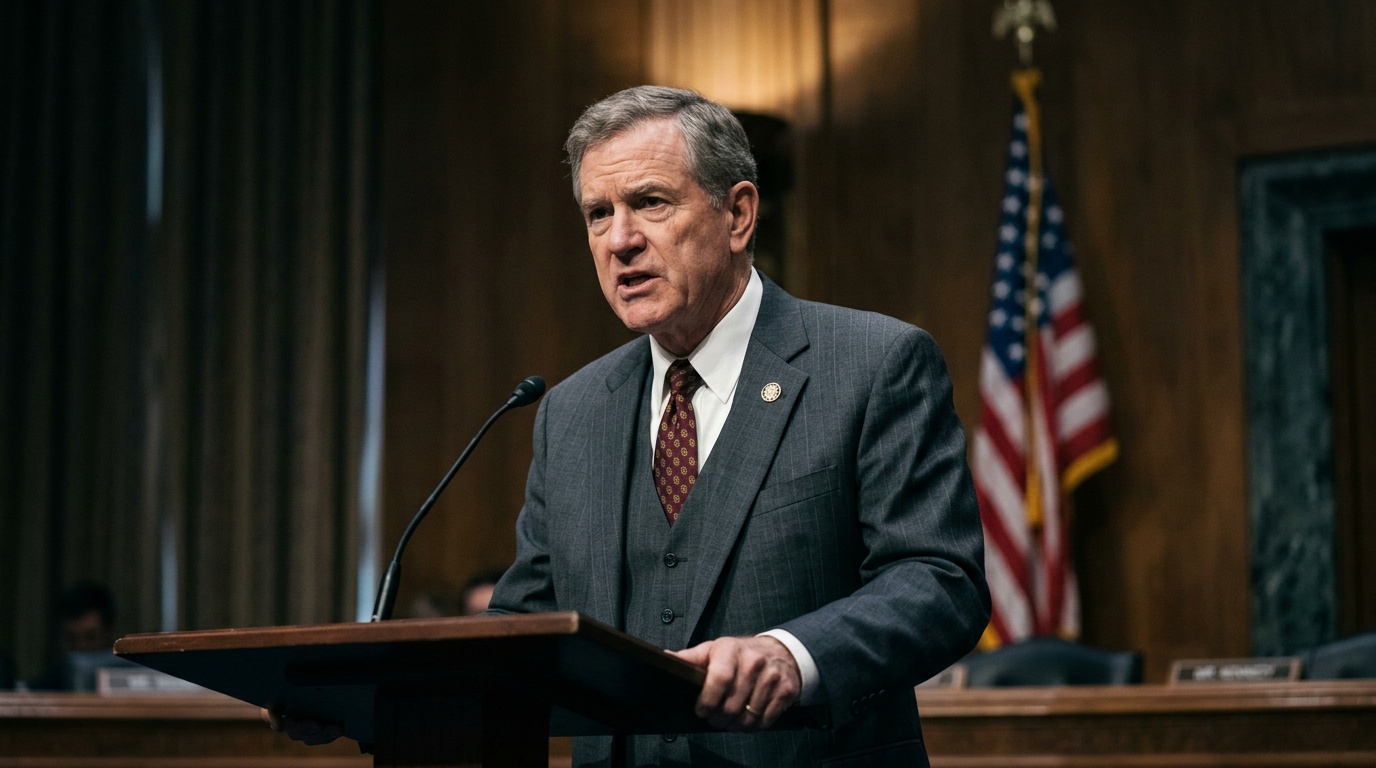
Imagine you're a congressional staffer. Your job is to serve the public, analyze policy, and maybe, just maybe, you have some insight into what might happen next in the world. Now imagine you could bet on it. That's the scenario Congressman Seth Moulton (MASS) (D-Mass.) wants to shut down, and he's starting with his own office.
On Wednesday, Moulton announced an immediate, office-wide ban prohibiting his staff from using prediction market platforms. You know the ones—sites like Polymarket and Kalshi where you can place bets on everything from election outcomes to whether a certain world leader will, well, have a bad day.
In a statement, Moulton didn't mince words. "Prediction markets have become a playground for corrupt insiders who are able to place bets on things like election outcomes, wars, and even the deaths of public figures," he said. "This is creating a perverse incentive structure that poses a genuine threat to American society today."
It's a classic conflict-of-interest argument, but applied to a very 21st-century problem. The core idea is simple: congressional staffers exist to serve constituents, not to profit from world events they might have a hand in shaping or early knowledge of. "My office has not, and will not, engage in these trades that run counter to every principle of a clean, honest government that works for the people," Moulton stated. He added, "I will always hold myself and my team to the highest ethical standards, and I call on every single American elected official to do the same."
This isn't happening in a vacuum. Moulton's announcement comes on the heels of a legislative push from Senators Adam Schiff (CA) (D-Calif.) and John Curtis (UT) (R-Utah). They've introduced the Prediction Markets Are Gambling Act, which aims to bar CFTC-regulated platforms from offering wagers on sports or casino-style games. The political winds seem to be shifting toward viewing these speculative markets with more suspicion.
And if you're wondering why a congressman would feel the need to make this rule now, a recent investigation provides a pretty compelling reason. According to a blockchain analysis by Bubblemaps, a network of seven Polymarket wallets managed to earn nearly $1 million by betting on U.S. and Israeli strikes against Iran. These accounts weren't just lucky; they posted a 93% win rate on large wagers over two years and placed bets mere hours before major attacks in October 2024, June 2025, and February 2026.
The investigation traced the network to an Israeli Defense Forces reservist who had previously been indicted for using classified intelligence. These wallets often dominated leaderboards and collectively achieved an 83% win rate—a figure that dwarfs the roughly 50% success rate of a typical trader just guessing. The suspected insider is reportedly still active, having made over $100,000 from the February strike alone.
So, when Moulton talks about a "playground for corrupt insiders" and a threat to public trust, he's pointing at a very real, and very profitable, pattern. His office ban is a small, symbolic step. But it's a clear signal that some in Washington are starting to look at prediction markets not as harmless fun or efficient forecasting tools, but as a potential vector for insider trading on global catastrophe.