So here's a snapshot of a certain kind of American frustration right now: you're paying a lot to fill up your car, you're stuck in a long line at the airport, and there's talk of sending more troops overseas. Senator Adam Schiff (D-CA) decided to package all that up into one tidy—and very critical—social media post aimed at President Donald Trump.
"Paying $5/gallon for gas to drive to an airport where you'll wait 4 hours to get monitored by untrained ICE agents," Schiff wrote on X, "as thousands of American troops prepare to deploy to the Middle East to fight a needless war." He capped it off with, "Another day in Donald Trump's America."
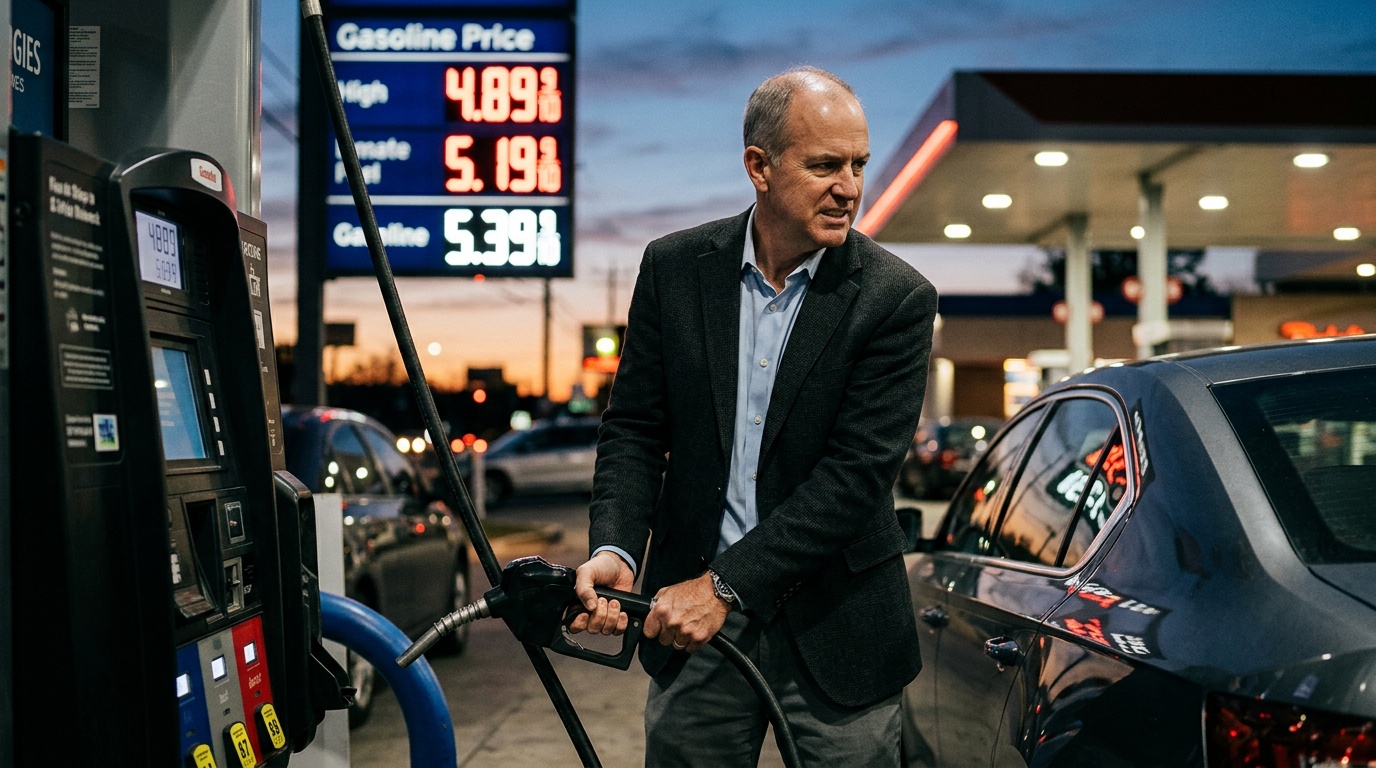
It's a political jab, sure, but it's anchored in some real numbers. While the national average for a gallon of gas was flirting with $4 on Monday, the pain at the pump is much sharper in Schiff's home state. In California, you're looking at over $5.70 a gallon. That's the kind of spike that gets other politicians talking, too. Senator Elizabeth Warren (D-Mass) pointed out that gas prices had jumped 27% in a month.
Schiff isn't flying solo on this. California Governor Gavin Newsom (D) also lit into the administration, calling the deployment of Immigration and Customs Enforcement (ICE) agents to airport security checkpoints "incompetent" as travelers face hours-long delays. Newsom also took a swing at GOP senators like Ted Cruz (R-TX) and Tom Cotton (R-AR) for blocking a Department of Homeland Security funding bill.
The use of ICE agents at airports is becoming a flashpoint. A video circulating from San Francisco Airport, shared by Senator Scott Wiener (D-CA), showed agents detaining a woman alleged to be undocumented as her daughter watched. Wiener criticized the agents for "terrorizing a mother" and called for ICE to be removed from California.
Meanwhile, out in the real economy where people drive for a living, companies are trying to adapt. The food delivery platform DoorDash Inc. (DASH) rolled out an emergency relief program for its drivers. It offers a 10% cashback deal with a DoorDash Crimson Visa Debit Card and weekly payments of $5 to $15 for drivers who log at least 125 miles on the platform. It's a direct response to the fuel cost crunch.
Over in the ride-hail world, drivers for Uber Technologies Inc. (UBER) and Lyft Inc. (LYFT) who are still driving gas-powered cars are getting strategic. They're telling reporters they're prioritizing the most profitable trips to protect their earnings, even if that means accepting rides to areas they consider less safe. On the flip side, drivers with electric vehicles say they're seeing more business—presumably because their "fuel" costs aren't tied to the volatile price of gasoline.
All this is happening against the backdrop of the situation that Schiff referenced: escalating tensions with Iran. President Trump had given Iran a 48-hour ultimatum to open the Strait of Hormuz, claiming talks were going well—a claim Iranian officials denied. Israeli Prime Minister Benjamin Netanyahu said Trump was optimistic about a potential U.S.-Israel joint agreement with Iran. But the headlines turned more violent, with reports of Iranian missiles hitting Tel Aviv and Israel saying it struck two Iranian Revolutionary Guard Corps intelligence sites.
So you've got a political critique that ties together the price at the pump, chaos at the airport, and conflict abroad. And you've got the gig economy scrambling to help its drivers cope with one piece of that puzzle. It's one of those moments where domestic policy, foreign policy, and the daily cost of living all collide in the same news cycle.