Marketdash

Bessent's Gamble: Why the U.S. Is Betting Escalation Will Cool Iran Tensions

MarketDash
Treasury Secretary Scott Bessent defended escalating U.S. strikes on Iran, arguing it's the only path to de-escalation, as military plans eye key oil chokepoints and the administration tries to manage soaring crude prices.

Get Market Alerts

Weekly insights + SMS alerts

Here's a tense geopolitical standoff for you: sometimes, you have to turn up the heat to cool things down. At least, that's the argument Treasury Secretary Scott Bessent made on Sunday, defending recent U.S. strikes on Iranian infrastructure as part of a necessary escalation in the ongoing U.S.-Israel conflict with Iran that began in February. The idea is that applying more pressure now might eventually lead to a de-escalation. It's a high-stakes gamble playing out as military planners reportedly eye strategic chokepoints and oil prices continue to climb.

The comments landed amid a flurry of activity. Reports described Iran arresting dozens of people it accused of supporting Israel, and Saudi Arabia saying it intercepted a ballistic missile aimed at a port. The situation feels like it's tightening.

The immediate trigger was a post by President Donald Trump on Truth Social on Saturday, giving Iran's leaders 48 hours to reopen the Strait of Hormuz or face U.S. strikes on power plants. Bessent, in his remarks, called this message "the only language the Iranians understand." Iran's response, delivered through military spokesman Col. Ebrahim Zolfaqari and reported by NBC News, was a warning: attacks on Iran's fuel and energy system would be met with retaliation against energy, technology, and desalination targets used by the U.S. and its regional partners.

So now we have a classic standoff, with an added tactical layer: will Washington move beyond air and sea pressure to physically hold key territory? According to Reuters, there are discussions inside the administration about sending thousands more troops to the Middle East. The options on the table range from protecting tanker traffic to actual ground deployments along Iran's coastline.

Escalation Strategy: A Risky Gamble?

In an interview on "Meet the Press," Bessent left the door wide open for one specific possibility: U.S. forces securing Kharg Island, a major Iranian oil export terminal located about 15 miles from the mainland. He had previously floated the idea that the island could become a "U.S. asset," and officials said Trump is weighing options to put troops there.

Trump himself has described strikes that he said "totally decimated" Kharg Island, while claiming he avoided hitting energy lines because rebuilding would take years. In a characteristically casual addendum, he said, "we may hit it a few more times just for fun."

As the U.S. posture hardens, other world leaders are trying to draw red lines. French President Emmanuel Macron, after speaking with Trump and Qatar's Emir Sheikh Tamim bin Hamad Al Thani, urged an immediate stop to attacks on energy and water systems. His argument: civilian protection and energy security need to be the priority.

Meanwhile, the Pentagon isn't underestimating Iran's ability to hit back. Gen. Dan Caine, the Joint Chiefs chair, said Iran retains "some capability" to strike U.S. assets. For its part, Iran's Intelligence Ministry announced the arrest of 97 people it accused of supporting Israel and said it dismantled five armed cells in the Khuzestan province.

Oil Market Tensions and Strategic Waivers

All this military maneuvering is happening against a backdrop of soaring oil prices, and Bessent is wearing two hats: one for national security and one for market stability. He recently shot down speculation that the U.S. Treasury would directly intervene in oil markets to curb prices, calling it just a "rumor."

Instead, he pointed to other levers. One is a temporary waiver allowing countries to purchase Russian oil that is "stranded at sea." The idea is to increase global supply without gutting the sanctions regime against Moscow. The other, more controversial lever involves Iran's own oil.

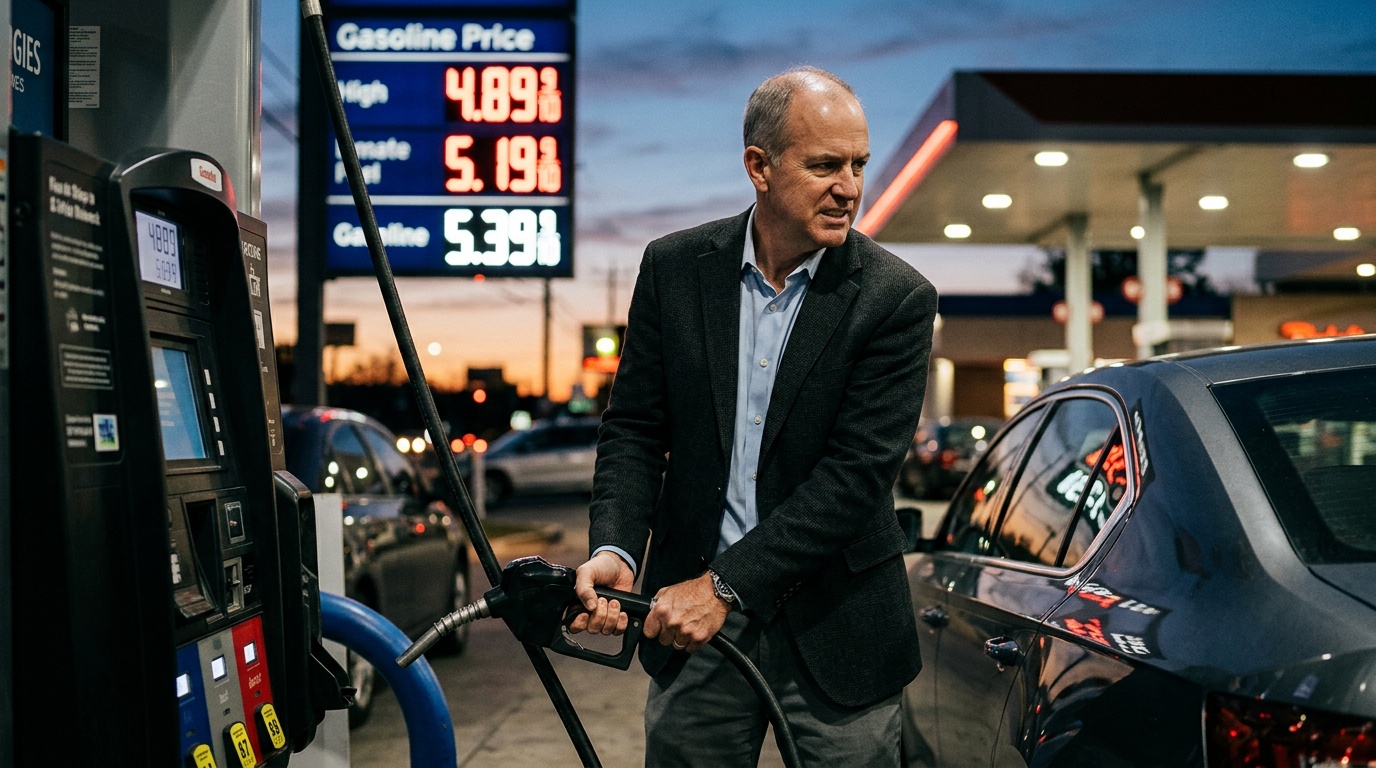
Brent crude futures have surged to $107.24 due to the conflict, underlining the fragile link between battlefield decisions and your gas pump. The administration's challenge is to navigate this volatility without crashing energy security.

Get Market Alerts

Weekly insights + SMS (optional)

Why The Strait Of Hormuz Is Crucial

Let's talk about the Strait of Hormuz, because it's the whole reason this is an energy crisis and not just a regional conflict. It's a main highway for oil tankers, and it's been closed since the war began. That single act has been a primary driver pushing up crude and U.S. gasoline prices.

The security risks aren't confined to Iranian waters. UK Maritime Trade Operations reported a vessel was hit by an unidentified projectile near Ras Laffan in Qatar. The crew was safe, but it sustained significant damage. Over in Saudi Arabia, officials said a drone struck the SAMREF refinery in Yanbu—a joint venture between Saudi Aramco and Exxon Mobil (XOM)—and that its forces intercepted and destroyed a ballistic missile headed for a port. Damage assessments are ongoing.

Potential Oil Market Impact From U.S. Actions

Here's where Bessent's dual-role strategy gets interesting. Alongside the military campaign, he's taking steps aimed at easing the oil supply crunch caused by the very same conflict. One major move is a Treasury action to allow sales of Iranian oil that is already "stranded at sea." According to reports, Bessent said this could release about 140 million barrels into global markets. His argument: this crude was headed to China anyway, typically at a discount, so why not manage its sale?

Over the weekend, Bessent framed this as a kind of jiu-jitsu, weaponizing Iran's own petroleum reserves as leverage. He also positioned the move as beneficial to key American partners in Asia, naming Tokyo, Seoul, Jakarta, and Kuala Lumpur.

Not everyone is buying the administration's approach. Connecticut Senator Chris Murphy voiced strong opposition during the same broadcast, arguing that policymakers have become "untethered from reality." He warned that the escalating conflict threatens economic stability, with inflationary pressures now burdening American households.

So, to sum up: the U.S. is escalating militarily while trying to engineer financial and oil-market workarounds to contain the economic fallout of that escalation. Bessent's bet is that more pressure now leads to a quicker resolution later. It's a strategy with clear risks—for global energy markets, regional stability, and the broader economy. Whether it's a calculated masterstroke or a dangerous miscalculation is the multi-trillion-dollar question.


Bessent's Gamble: Why the U.S. Is Betting Escalation Will Cool Iran Tensions

MarketDash
Treasury Secretary Scott Bessent defended escalating U.S. strikes on Iran, arguing it's the only path to de-escalation, as military plans eye key oil chokepoints and the administration tries to manage soaring crude prices.

Get Market Alerts

Weekly insights + SMS alerts

Here's a tense geopolitical standoff for you: sometimes, you have to turn up the heat to cool things down. At least, that's the argument Treasury Secretary Scott Bessent made on Sunday, defending recent U.S. strikes on Iranian infrastructure as part of a necessary escalation in the ongoing U.S.-Israel conflict with Iran that began in February. The idea is that applying more pressure now might eventually lead to a de-escalation. It's a high-stakes gamble playing out as military planners reportedly eye strategic chokepoints and oil prices continue to climb.

The comments landed amid a flurry of activity. Reports described Iran arresting dozens of people it accused of supporting Israel, and Saudi Arabia saying it intercepted a ballistic missile aimed at a port. The situation feels like it's tightening.

The immediate trigger was a post by President Donald Trump on Truth Social on Saturday, giving Iran's leaders 48 hours to reopen the Strait of Hormuz or face U.S. strikes on power plants. Bessent, in his remarks, called this message "the only language the Iranians understand." Iran's response, delivered through military spokesman Col. Ebrahim Zolfaqari and reported by NBC News, was a warning: attacks on Iran's fuel and energy system would be met with retaliation against energy, technology, and desalination targets used by the U.S. and its regional partners.

So now we have a classic standoff, with an added tactical layer: will Washington move beyond air and sea pressure to physically hold key territory? According to Reuters, there are discussions inside the administration about sending thousands more troops to the Middle East. The options on the table range from protecting tanker traffic to actual ground deployments along Iran's coastline.

Escalation Strategy: A Risky Gamble?

In an interview on "Meet the Press," Bessent left the door wide open for one specific possibility: U.S. forces securing Kharg Island, a major Iranian oil export terminal located about 15 miles from the mainland. He had previously floated the idea that the island could become a "U.S. asset," and officials said Trump is weighing options to put troops there.

Trump himself has described strikes that he said "totally decimated" Kharg Island, while claiming he avoided hitting energy lines because rebuilding would take years. In a characteristically casual addendum, he said, "we may hit it a few more times just for fun."

As the U.S. posture hardens, other world leaders are trying to draw red lines. French President Emmanuel Macron, after speaking with Trump and Qatar's Emir Sheikh Tamim bin Hamad Al Thani, urged an immediate stop to attacks on energy and water systems. His argument: civilian protection and energy security need to be the priority.

Meanwhile, the Pentagon isn't underestimating Iran's ability to hit back. Gen. Dan Caine, the Joint Chiefs chair, said Iran retains "some capability" to strike U.S. assets. For its part, Iran's Intelligence Ministry announced the arrest of 97 people it accused of supporting Israel and said it dismantled five armed cells in the Khuzestan province.

Oil Market Tensions and Strategic Waivers

All this military maneuvering is happening against a backdrop of soaring oil prices, and Bessent is wearing two hats: one for national security and one for market stability. He recently shot down speculation that the U.S. Treasury would directly intervene in oil markets to curb prices, calling it just a "rumor."

Instead, he pointed to other levers. One is a temporary waiver allowing countries to purchase Russian oil that is "stranded at sea." The idea is to increase global supply without gutting the sanctions regime against Moscow. The other, more controversial lever involves Iran's own oil.

Brent crude futures have surged to $107.24 due to the conflict, underlining the fragile link between battlefield decisions and your gas pump. The administration's challenge is to navigate this volatility without crashing energy security.

Get Market Alerts

Weekly insights + SMS (optional)

Why The Strait Of Hormuz Is Crucial

Let's talk about the Strait of Hormuz, because it's the whole reason this is an energy crisis and not just a regional conflict. It's a main highway for oil tankers, and it's been closed since the war began. That single act has been a primary driver pushing up crude and U.S. gasoline prices.

The security risks aren't confined to Iranian waters. UK Maritime Trade Operations reported a vessel was hit by an unidentified projectile near Ras Laffan in Qatar. The crew was safe, but it sustained significant damage. Over in Saudi Arabia, officials said a drone struck the SAMREF refinery in Yanbu—a joint venture between Saudi Aramco and Exxon Mobil (XOM)—and that its forces intercepted and destroyed a ballistic missile headed for a port. Damage assessments are ongoing.

Potential Oil Market Impact From U.S. Actions

Here's where Bessent's dual-role strategy gets interesting. Alongside the military campaign, he's taking steps aimed at easing the oil supply crunch caused by the very same conflict. One major move is a Treasury action to allow sales of Iranian oil that is already "stranded at sea." According to reports, Bessent said this could release about 140 million barrels into global markets. His argument: this crude was headed to China anyway, typically at a discount, so why not manage its sale?

Over the weekend, Bessent framed this as a kind of jiu-jitsu, weaponizing Iran's own petroleum reserves as leverage. He also positioned the move as beneficial to key American partners in Asia, naming Tokyo, Seoul, Jakarta, and Kuala Lumpur.

Not everyone is buying the administration's approach. Connecticut Senator Chris Murphy voiced strong opposition during the same broadcast, arguing that policymakers have become "untethered from reality." He warned that the escalating conflict threatens economic stability, with inflationary pressures now burdening American households.

So, to sum up: the U.S. is escalating militarily while trying to engineer financial and oil-market workarounds to contain the economic fallout of that escalation. Bessent's bet is that more pressure now leads to a quicker resolution later. It's a strategy with clear risks—for global energy markets, regional stability, and the broader economy. Whether it's a calculated masterstroke or a dangerous miscalculation is the multi-trillion-dollar question.