Marketdash

How 21 Days of War in Iran Rewrote the Financial Playbook

MarketDash
Brent crude up 49%, diesel up 61% in a single month, gold crashing against oil, and bond yields screaming. This isn't just a geopolitical shock—it's a full-scale macro regime change playing out in real time.

Get Alaska Air Group Alerts

Weekly insights + SMS alerts

So here's the thing about financial markets: they're supposed to absorb shocks. A war breaks out, oil jumps, everyone gets nervous for a bit, and then things slowly settle back down. It's the classic playbook.

But three weeks into the conflict involving Iran, something different is happening. Markets aren't just reacting; they're rewriting the history books. Moves are happening across every major asset class—oil, bonds, stocks, commodities—at a pace and scale that, in some cases, has literally never been seen before.

This isn't just an oil story. It's a full-spectrum energy shock that's rippling through the entire global economy, compressing what might normally take years into a matter of weeks. Taken together, these moves point to something bigger than a single event. They suggest we might be watching a real-time shift in the entire macroeconomic regime.

Let's walk through the seven charts that tell this story.

1. Brent Crude: A Surge Straight Out of 1973

Brent crude—the global benchmark you can track through the United States Brent Oil Fund LP, ETF (BNO)—is up 49% in March. That's its strongest monthly move since November 1973.

Why does that date matter? That was the Arab oil embargo. It triggered a recession, forced the U.S. to completely rethink its postwar energy assumptions, and reshaped geopolitics for a generation. March 2026 is now in the same league.

The Strait of Hormuz, a chokepoint for about 20% of the world's daily oil trade, is under military threat. Triple-digit oil prices aren't just an energy story anymore; they're a cost-of-everything story. Every product moved by truck, every farm running on diesel, every factory using petrochemicals has just seen its cost structure repriced—in weeks.

2. Diesel: An Unprecedented Spike That Powers Everything

If Brent's move is historic, diesel's is unprecedented. New York Harbor Ultra-Low Sulphur Diesel (ULSD) futures are up 61% this month. That's the largest monthly increase in the history of the contract, dwarfing spikes from the 2008 commodity boom and the 2022 Russian invasion.

Diesel is the transmission mechanism for the entire economy. It powers about 70% of U.S. freight. It fuels tractors that grow our food. It heats homes in the Northeast. There is literally no physical good in the American supply chain that doesn't have embedded diesel cost. And that cost just rose 61% in 30 days.

The AAA national average for retail diesel is now $5.099 per gallon, up from $3.677 last month. That's not a statistic; that's a direct hit to every business and consumer.

Get Alaska Air Group Alerts

Weekly insights + SMS (optional)

3. Gasoline: The Pump Price Everyone Feels

Gasoline futures (RBOB) are up 38% month-to-date. That's the biggest monthly jump since March 1999, when OPEC surprise cuts ended a long period of cheap oil.

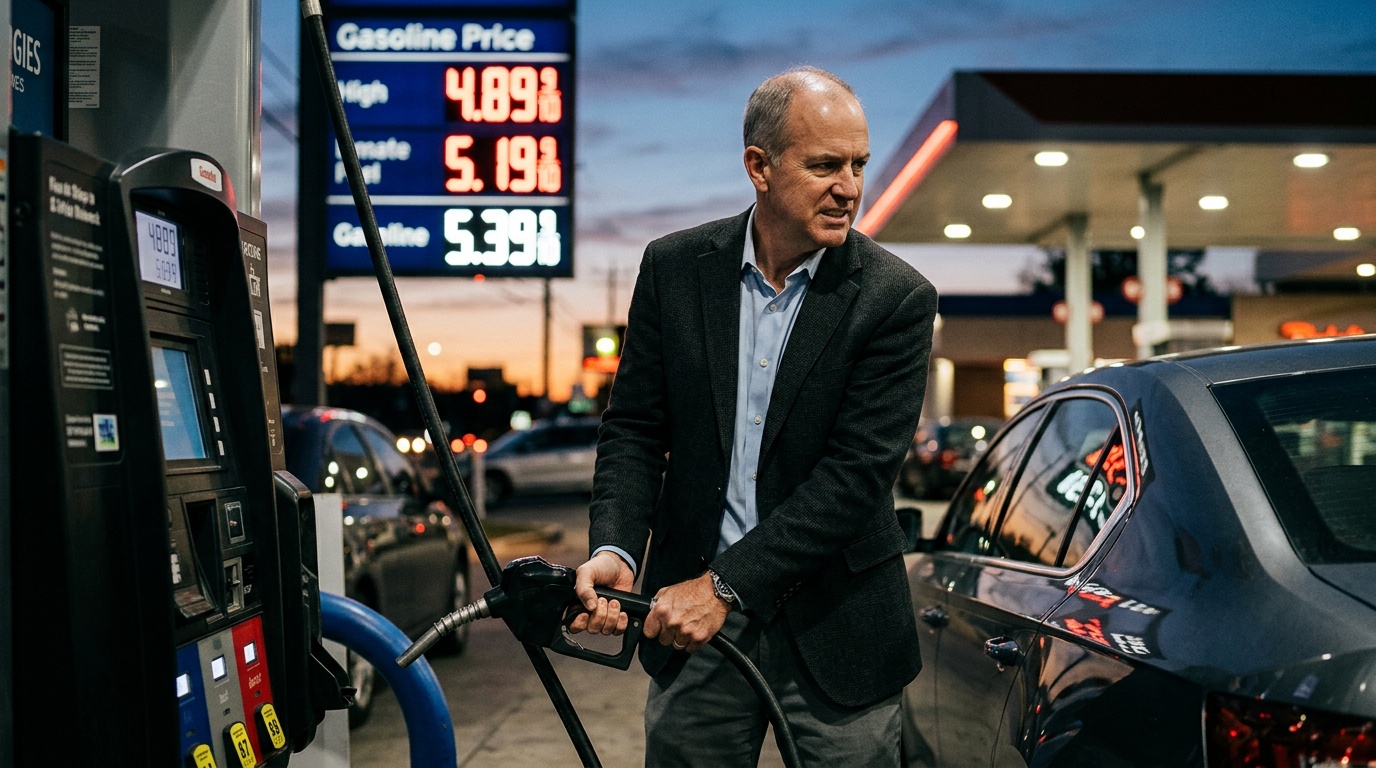
For the average American, the gas pump is the most visible and politically sensitive part of this shock. At current futures levels, the national average retail price flirting with or exceeding $4.50 a gallon could be a matter of days, not months. It's the most direct tax this crisis imposes on household budgets.

4. Gold vs. Oil: The Classic Hedge Gets Crushed

The gold-to-Brent ratio has collapsed 41% in March. That's its worst monthly reading since January 1974, right in the thick of that first oil crisis.

The ratio is getting hammered from both sides. Oil is soaring on supply fears. At the same time, the inflation wave that oil triggers is forcing markets to reconsider the entire interest rate outlook. The expected central bank easing that had been a major tailwind for gold is evaporating, potentially turning into rate hikes.

Gold prices themselves are down 12% since the conflict began. That's a terrible advertisement for the oldest crisis hedge in the book. The pain is direct for miners: the VanEck Gold Miners ETF (GDX) has crashed 29% this month, on pace for its worst decline since October 2008—the heart of the financial crisis.

5. Silver vs. Oil: A Hot Trade Goes Cold

Silver entered 2026 as one of the hottest markets around, coming off its best annual performance since 1979. The thesis was simple: stabilizing inflation and aggressive pricing of rate cuts ahead were bullish.

Twenty days of war dismantled that entire idea. The silver-to-Brent ratio has collapsed 49% in March, on track for its worst month since April 1980—the month the Hunt Brothers' silver bubble famously burst.

Back then, silver was killed by the Volcker shock and soaring rates. Today, it's being killed by an oil-driven inflation surge that's turning expected rate cuts into a liability. Silver itself is down 23% this month, its worst performance since 2011.

6. Refiners vs. Airlines: The Stock Market's Brutal Verdict

The equity market is casting its vote on this shock through one of the most visceral trades out there: refiners versus airlines.

The ratio of Valero Energy Corp. (VLO) to Alaska Air Group Inc. (ALK) has surged nearly 61% this month. That's the largest monthly move in the ratio's recorded history, which goes back to 1980.

The logic is brutally simple. Valero refines the crude that's surging in price; it captures the fat margin between raw oil and finished products like jet fuel. Alaska Air burns that jet fuel. It has no immediate ability to pass those costs to customers and no hedge big enough to absorb a 60% monthly spike in its primary input.

One side of this trade is looking at record profits. The other is watching its business model get stress-tested in real time. The market is drawing a very clear line between winners and losers.

7. UK Bond Yields: The Bond Market Starts Screaming

UK 2-year government bond (gilt) yields have spiked by nearly 99 basis points (0.99%) in March. That's the largest monthly jump since the Liz Truss "mini-budget" crisis of September 2022, which triggered a Bank of England emergency intervention and collapsed a government in 44 days.

The parallel is telling, but the cause is different. The Truss shock was a fiscal credibility crisis. This is an inflation credibility crisis. Markets are losing confidence that central banks can contain a supply-side, oil-driven inflation surge that monetary policy can't easily fix.

Short-term bond yields are the market's purest expression of near-term interest rate expectations. A 99-bps move in a month is the bond market shouting that the easing cycle is over and that the next move could very well be a hike.

This isn't just a UK story. The probability of a Federal Reserve rate hike in 2026 has already doubled to 18% (from about 8% pre-conflict), according to prediction markets. The most likely Fed outcome for the year is now zero rate cuts, with a 34% probability—up from just 9% before the war began. The bond market isn't whispering about higher rates anymore; it's screaming.

So, Is This Just a Shock, or a New Regime?

The natural instinct in finance is to assume things revert to the mean. Shocks fade. Chokepoints reopen. Prices normalize. That instinct has been mostly right for every energy disruption since the 1970s, even if the unwind took longer than expected.

But this episode has features that complicate a quick return to normal.

First, the scale is without modern precedent. Diesel posting its largest monthly increase ever isn't a blip; it's a deep, structural repricing of the global supply chain. Those cost increases—in freight, food production, and industrial inputs—will stick around for months, even if the Strait of Hormuz were to reopen tomorrow.

Second, it's hitting everywhere at once: commodities, bonds, and equities are all moving in sync at historic speeds. That suggests a systemic reassessment, not an isolated event.

Third, it's breaking the traditional crisis playbook. Gold, the go-to safe haven, is falling. The market is forcing a rapid rethink of the entire interest rate trajectory for the year.

Twenty-one days in, this looks less like a market processing a shock and more like a market writing the first chapter of a new playbook. Whether it's a short, brutal chapter or the start of a much longer story is the trillion-dollar question everyone is now trying to answer.


How 21 Days of War in Iran Rewrote the Financial Playbook

MarketDash
Brent crude up 49%, diesel up 61% in a single month, gold crashing against oil, and bond yields screaming. This isn't just a geopolitical shock—it's a full-scale macro regime change playing out in real time.

Get Alaska Air Group Alerts

Weekly insights + SMS alerts

So here's the thing about financial markets: they're supposed to absorb shocks. A war breaks out, oil jumps, everyone gets nervous for a bit, and then things slowly settle back down. It's the classic playbook.

But three weeks into the conflict involving Iran, something different is happening. Markets aren't just reacting; they're rewriting the history books. Moves are happening across every major asset class—oil, bonds, stocks, commodities—at a pace and scale that, in some cases, has literally never been seen before.

This isn't just an oil story. It's a full-spectrum energy shock that's rippling through the entire global economy, compressing what might normally take years into a matter of weeks. Taken together, these moves point to something bigger than a single event. They suggest we might be watching a real-time shift in the entire macroeconomic regime.

Let's walk through the seven charts that tell this story.

1. Brent Crude: A Surge Straight Out of 1973

Brent crude—the global benchmark you can track through the United States Brent Oil Fund LP, ETF (BNO)—is up 49% in March. That's its strongest monthly move since November 1973.

Why does that date matter? That was the Arab oil embargo. It triggered a recession, forced the U.S. to completely rethink its postwar energy assumptions, and reshaped geopolitics for a generation. March 2026 is now in the same league.

The Strait of Hormuz, a chokepoint for about 20% of the world's daily oil trade, is under military threat. Triple-digit oil prices aren't just an energy story anymore; they're a cost-of-everything story. Every product moved by truck, every farm running on diesel, every factory using petrochemicals has just seen its cost structure repriced—in weeks.

2. Diesel: An Unprecedented Spike That Powers Everything

If Brent's move is historic, diesel's is unprecedented. New York Harbor Ultra-Low Sulphur Diesel (ULSD) futures are up 61% this month. That's the largest monthly increase in the history of the contract, dwarfing spikes from the 2008 commodity boom and the 2022 Russian invasion.

Diesel is the transmission mechanism for the entire economy. It powers about 70% of U.S. freight. It fuels tractors that grow our food. It heats homes in the Northeast. There is literally no physical good in the American supply chain that doesn't have embedded diesel cost. And that cost just rose 61% in 30 days.

The AAA national average for retail diesel is now $5.099 per gallon, up from $3.677 last month. That's not a statistic; that's a direct hit to every business and consumer.

Get Alaska Air Group Alerts

Weekly insights + SMS (optional)

3. Gasoline: The Pump Price Everyone Feels

Gasoline futures (RBOB) are up 38% month-to-date. That's the biggest monthly jump since March 1999, when OPEC surprise cuts ended a long period of cheap oil.

For the average American, the gas pump is the most visible and politically sensitive part of this shock. At current futures levels, the national average retail price flirting with or exceeding $4.50 a gallon could be a matter of days, not months. It's the most direct tax this crisis imposes on household budgets.

4. Gold vs. Oil: The Classic Hedge Gets Crushed

The gold-to-Brent ratio has collapsed 41% in March. That's its worst monthly reading since January 1974, right in the thick of that first oil crisis.

The ratio is getting hammered from both sides. Oil is soaring on supply fears. At the same time, the inflation wave that oil triggers is forcing markets to reconsider the entire interest rate outlook. The expected central bank easing that had been a major tailwind for gold is evaporating, potentially turning into rate hikes.

Gold prices themselves are down 12% since the conflict began. That's a terrible advertisement for the oldest crisis hedge in the book. The pain is direct for miners: the VanEck Gold Miners ETF (GDX) has crashed 29% this month, on pace for its worst decline since October 2008—the heart of the financial crisis.

5. Silver vs. Oil: A Hot Trade Goes Cold

Silver entered 2026 as one of the hottest markets around, coming off its best annual performance since 1979. The thesis was simple: stabilizing inflation and aggressive pricing of rate cuts ahead were bullish.

Twenty days of war dismantled that entire idea. The silver-to-Brent ratio has collapsed 49% in March, on track for its worst month since April 1980—the month the Hunt Brothers' silver bubble famously burst.

Back then, silver was killed by the Volcker shock and soaring rates. Today, it's being killed by an oil-driven inflation surge that's turning expected rate cuts into a liability. Silver itself is down 23% this month, its worst performance since 2011.

6. Refiners vs. Airlines: The Stock Market's Brutal Verdict

The equity market is casting its vote on this shock through one of the most visceral trades out there: refiners versus airlines.

The ratio of Valero Energy Corp. (VLO) to Alaska Air Group Inc. (ALK) has surged nearly 61% this month. That's the largest monthly move in the ratio's recorded history, which goes back to 1980.

The logic is brutally simple. Valero refines the crude that's surging in price; it captures the fat margin between raw oil and finished products like jet fuel. Alaska Air burns that jet fuel. It has no immediate ability to pass those costs to customers and no hedge big enough to absorb a 60% monthly spike in its primary input.

One side of this trade is looking at record profits. The other is watching its business model get stress-tested in real time. The market is drawing a very clear line between winners and losers.

7. UK Bond Yields: The Bond Market Starts Screaming

UK 2-year government bond (gilt) yields have spiked by nearly 99 basis points (0.99%) in March. That's the largest monthly jump since the Liz Truss "mini-budget" crisis of September 2022, which triggered a Bank of England emergency intervention and collapsed a government in 44 days.

The parallel is telling, but the cause is different. The Truss shock was a fiscal credibility crisis. This is an inflation credibility crisis. Markets are losing confidence that central banks can contain a supply-side, oil-driven inflation surge that monetary policy can't easily fix.

Short-term bond yields are the market's purest expression of near-term interest rate expectations. A 99-bps move in a month is the bond market shouting that the easing cycle is over and that the next move could very well be a hike.

This isn't just a UK story. The probability of a Federal Reserve rate hike in 2026 has already doubled to 18% (from about 8% pre-conflict), according to prediction markets. The most likely Fed outcome for the year is now zero rate cuts, with a 34% probability—up from just 9% before the war began. The bond market isn't whispering about higher rates anymore; it's screaming.

So, Is This Just a Shock, or a New Regime?

The natural instinct in finance is to assume things revert to the mean. Shocks fade. Chokepoints reopen. Prices normalize. That instinct has been mostly right for every energy disruption since the 1970s, even if the unwind took longer than expected.

But this episode has features that complicate a quick return to normal.

First, the scale is without modern precedent. Diesel posting its largest monthly increase ever isn't a blip; it's a deep, structural repricing of the global supply chain. Those cost increases—in freight, food production, and industrial inputs—will stick around for months, even if the Strait of Hormuz were to reopen tomorrow.

Second, it's hitting everywhere at once: commodities, bonds, and equities are all moving in sync at historic speeds. That suggests a systemic reassessment, not an isolated event.

Third, it's breaking the traditional crisis playbook. Gold, the go-to safe haven, is falling. The market is forcing a rapid rethink of the entire interest rate trajectory for the year.

Twenty-one days in, this looks less like a market processing a shock and more like a market writing the first chapter of a new playbook. Whether it's a short, brutal chapter or the start of a much longer story is the trillion-dollar question everyone is now trying to answer.