Marketdash

The Real Energy Crisis Isn't About Crude Oil. It's Diesel.

MarketDash
While everyone watches crude prices, diesel just topped $5 a gallon for the first time since 2022. Goldman Sachs says the real shock is in refined fuels, and the numbers are staggering.

Get Market Alerts

Weekly insights + SMS alerts

Here's a funny thing about energy markets. When there's a war in a major oil-producing region, everyone's eyes snap to the crude oil price. It's the headline number, the big benchmark. But sometimes, the real action—and the real pain—is happening somewhere else entirely.

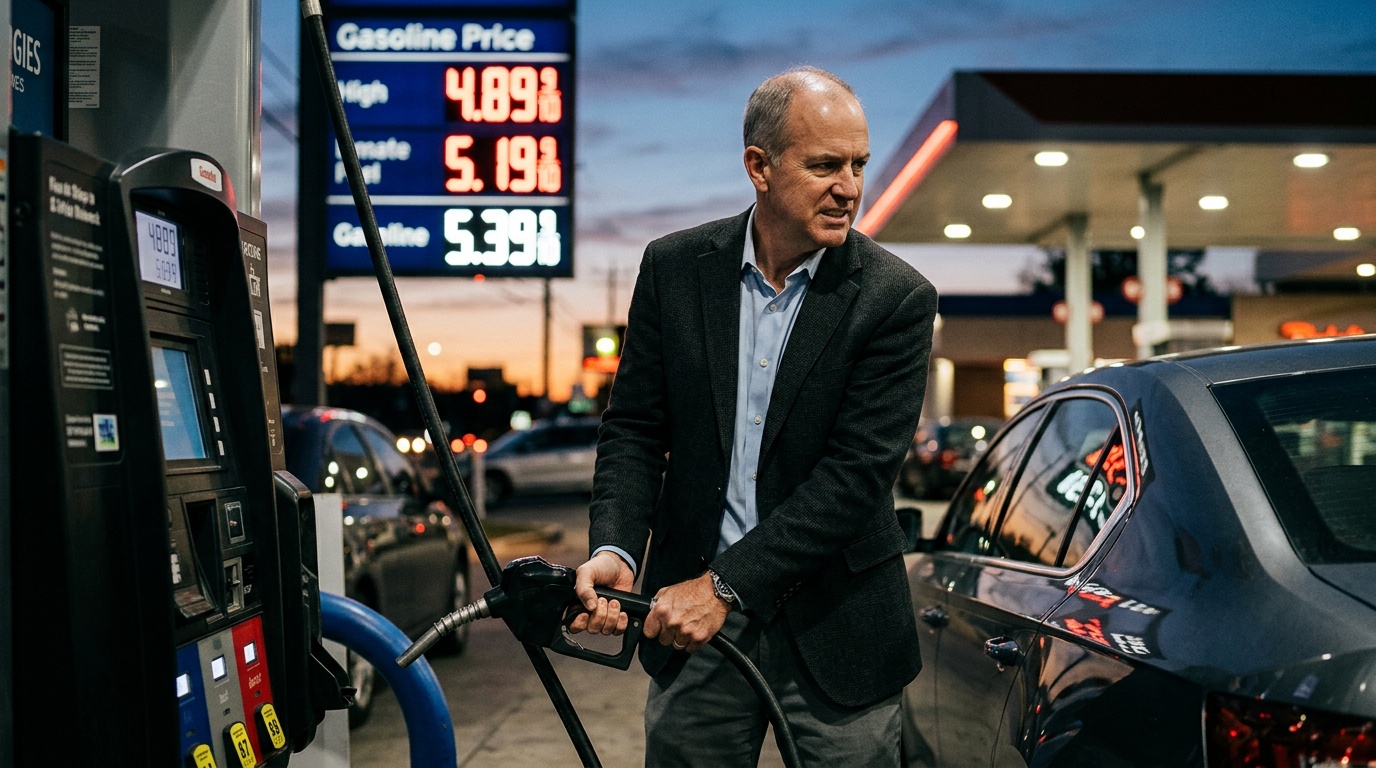
Right now, that somewhere else is the diesel pump. While you've been watching crude, diesel prices have been quietly staging a massive rally. The national average price for diesel crossed $5.044 per gallon on Tuesday, according to the American Automobile Association. That's the first time it's been above five bucks since the energy shock that followed Russia's invasion of Ukraine in 2022.

And in some places, it's much worse. Three states are already living in a six-dollar world: California at $6.49, Washington at $6.11, and Hawaii at $6.01.

This isn't just about gas stations marking up prices. It's reflecting a powerful surge in the wholesale market. Futures for NY Harbor ultra-low sulfur diesel (ULSD) hit $3.80 per gallon on Tuesday. That's a 46% jump since the start of the recent Middle East supply disruptions. If you convert that diesel price into the terms oil traders use, it works out to roughly $159.60 per barrel.

Now, compare that to the U.S. crude benchmark, West Texas Intermediate (WTI). The difference between the diesel price and the crude price is the refining margin, or the "crack spread." That spread is now nearly $64 per barrel. To put it simply, the stuff coming out of the refinery is worth a lot more than the stuff going in, and that gap is one of the widest it's been since the last global energy crisis.

Why Refined Fuels Are Getting Squeezed

So why is diesel getting hit so much harder than crude? It boils down to a simple but crucial distinction: the problem isn't a lack of crude oil in the ground. It's a lack of capacity to turn that crude into the specific fuels we need, especially diesel and jet fuel (which are together called "middle distillates").

"The war in the Middle East is an even larger shock for refined products than crude," Goldman Sachs analysts, including Yulia Zhestkova Grigsby, said in a note this week. They point out that jet fuel prices in Singapore and Northwest Europe hit all-time highs above $200 per barrel last week.

This refined product crunch is happening through three main channels.

  1. The Export Chokepoint: The Persian Gulf normally exports about 3.3 million barrels per day of refined products. That's roughly 13% of global flows. A huge amount of that—especially diesel and jet fuel—has to sail through the narrow Strait of Hormuz. It's a major vulnerability in the global supply chain.
  2. Refineries Are Offline: Goldman estimates there are 2.2 million barrels per day of refinery outages in the Middle East right now. The International Energy Agency is even more concerned, saying more than 4 million barrels per day of refining capacity is currently at risk. When refineries are down, they simply aren't making diesel.
  3. The Wrong Kind of Crude: Not all crude oil is the same. Diesel and fuel oil are best made from medium and heavy grades of crude. There's a growing shortage of exactly those types. Global exports of medium and heavy crude have fallen by 5 million barrels per day this year. Meanwhile, exports of lighter crude have gone up by 1.7 million barrels per day. If refineries can't get the right raw material, they can't make the right end product.

It Costs More to Move It, Too

As if the production problems weren't enough, it's also getting more expensive to move the fuel that does get made. The cost to ship refined products on "clean" tankers has risen by $3.4 per barrel since the start of the year. That's a 70% increase. Higher freight rates boost refining margins and make the physical supply of fuel even tighter.

On top of that, some refineries in Asia are already starting to process less crude because they can't get enough supply. Early estimates show about 300,000 barrels per day of reduced processing last week, with potentially another 700,000 barrels per day of losses coming in March.

Get Market Alerts

Weekly insights + SMS (optional)

Who Wins When Diesel Gets Expensive?

For consumers and trucking companies, soaring diesel prices are a headache. For the companies that refine crude into diesel, it's a windfall. That wide crack spread—the nearly $64 difference—goes straight to their bottom line.

You can see it in the market. The VanEck Oil Refiners ETF (CRAK), which tracks global refining companies, has risen for 11 weeks in a row. That's its longest winning streak since the fund launched. Since the start of the recent conflict, the ETF is up more than 8%, while the broader market, as tracked by the SPDR S&P 500 ETF Trust (SPY), has slipped about 2%.

The most direct beneficiaries are the big U.S. refiners. Think of companies like Marathon Petroleum Corp. (MPC), Valero Energy Corp. (VLO), PBF Energy Inc. (PBF), Phillips 66 (PSX), and HF Sinclair Corp. (DINO). When the gap between their input costs and their selling prices blows out like this, their earnings prospects get a lot brighter.

So the next time you see a headline about oil prices, remember the lesson from the diesel pump. The real story in an energy crisis often isn't about the raw material. It's about the complex, fragile, and expensive system that turns it into something we can actually use.


The Real Energy Crisis Isn't About Crude Oil. It's Diesel.

MarketDash
While everyone watches crude prices, diesel just topped $5 a gallon for the first time since 2022. Goldman Sachs says the real shock is in refined fuels, and the numbers are staggering.

Get Market Alerts

Weekly insights + SMS alerts

Here's a funny thing about energy markets. When there's a war in a major oil-producing region, everyone's eyes snap to the crude oil price. It's the headline number, the big benchmark. But sometimes, the real action—and the real pain—is happening somewhere else entirely.

Right now, that somewhere else is the diesel pump. While you've been watching crude, diesel prices have been quietly staging a massive rally. The national average price for diesel crossed $5.044 per gallon on Tuesday, according to the American Automobile Association. That's the first time it's been above five bucks since the energy shock that followed Russia's invasion of Ukraine in 2022.

And in some places, it's much worse. Three states are already living in a six-dollar world: California at $6.49, Washington at $6.11, and Hawaii at $6.01.

This isn't just about gas stations marking up prices. It's reflecting a powerful surge in the wholesale market. Futures for NY Harbor ultra-low sulfur diesel (ULSD) hit $3.80 per gallon on Tuesday. That's a 46% jump since the start of the recent Middle East supply disruptions. If you convert that diesel price into the terms oil traders use, it works out to roughly $159.60 per barrel.

Now, compare that to the U.S. crude benchmark, West Texas Intermediate (WTI). The difference between the diesel price and the crude price is the refining margin, or the "crack spread." That spread is now nearly $64 per barrel. To put it simply, the stuff coming out of the refinery is worth a lot more than the stuff going in, and that gap is one of the widest it's been since the last global energy crisis.

Why Refined Fuels Are Getting Squeezed

So why is diesel getting hit so much harder than crude? It boils down to a simple but crucial distinction: the problem isn't a lack of crude oil in the ground. It's a lack of capacity to turn that crude into the specific fuels we need, especially diesel and jet fuel (which are together called "middle distillates").

"The war in the Middle East is an even larger shock for refined products than crude," Goldman Sachs analysts, including Yulia Zhestkova Grigsby, said in a note this week. They point out that jet fuel prices in Singapore and Northwest Europe hit all-time highs above $200 per barrel last week.

This refined product crunch is happening through three main channels.

  1. The Export Chokepoint: The Persian Gulf normally exports about 3.3 million barrels per day of refined products. That's roughly 13% of global flows. A huge amount of that—especially diesel and jet fuel—has to sail through the narrow Strait of Hormuz. It's a major vulnerability in the global supply chain.
  2. Refineries Are Offline: Goldman estimates there are 2.2 million barrels per day of refinery outages in the Middle East right now. The International Energy Agency is even more concerned, saying more than 4 million barrels per day of refining capacity is currently at risk. When refineries are down, they simply aren't making diesel.
  3. The Wrong Kind of Crude: Not all crude oil is the same. Diesel and fuel oil are best made from medium and heavy grades of crude. There's a growing shortage of exactly those types. Global exports of medium and heavy crude have fallen by 5 million barrels per day this year. Meanwhile, exports of lighter crude have gone up by 1.7 million barrels per day. If refineries can't get the right raw material, they can't make the right end product.

It Costs More to Move It, Too

As if the production problems weren't enough, it's also getting more expensive to move the fuel that does get made. The cost to ship refined products on "clean" tankers has risen by $3.4 per barrel since the start of the year. That's a 70% increase. Higher freight rates boost refining margins and make the physical supply of fuel even tighter.

On top of that, some refineries in Asia are already starting to process less crude because they can't get enough supply. Early estimates show about 300,000 barrels per day of reduced processing last week, with potentially another 700,000 barrels per day of losses coming in March.

Get Market Alerts

Weekly insights + SMS (optional)

Who Wins When Diesel Gets Expensive?

For consumers and trucking companies, soaring diesel prices are a headache. For the companies that refine crude into diesel, it's a windfall. That wide crack spread—the nearly $64 difference—goes straight to their bottom line.

You can see it in the market. The VanEck Oil Refiners ETF (CRAK), which tracks global refining companies, has risen for 11 weeks in a row. That's its longest winning streak since the fund launched. Since the start of the recent conflict, the ETF is up more than 8%, while the broader market, as tracked by the SPDR S&P 500 ETF Trust (SPY), has slipped about 2%.

The most direct beneficiaries are the big U.S. refiners. Think of companies like Marathon Petroleum Corp. (MPC), Valero Energy Corp. (VLO), PBF Energy Inc. (PBF), Phillips 66 (PSX), and HF Sinclair Corp. (DINO). When the gap between their input costs and their selling prices blows out like this, their earnings prospects get a lot brighter.

So the next time you see a headline about oil prices, remember the lesson from the diesel pump. The real story in an energy crisis often isn't about the raw material. It's about the complex, fragile, and expensive system that turns it into something we can actually use.