Here's a way to think about the current market mood, courtesy of Anthony Scaramucci: it's a codependent relationship. The former White House communications director argues that President Donald Trump and the financial markets are locked in a feedback loop, each one watching the other for the next move.
Scaramucci's core idea is that this standoff could cool down fast. He suggests Trump could simply announce a success—declare victory, essentially—and give the markets a clear reason to rebound. It's a bit like the president holding up a sign that says "Mission Accomplished" for Wall Street. In a post on X, Scaramucci described this as an available "off-ramp" where Trump can set up conditions for de-escalation at any time.
This isn't just political commentary; it's a market thesis. Scaramucci has made a similar point about market cycles in the past, arguing they last until investors are truly drained of capital, not just scared. He's framed sentiment as a positioning problem: when everyone is too cautious, even bad news might not push prices lower because there's no one left to sell.
How Trump And Markets Fuel Each Other
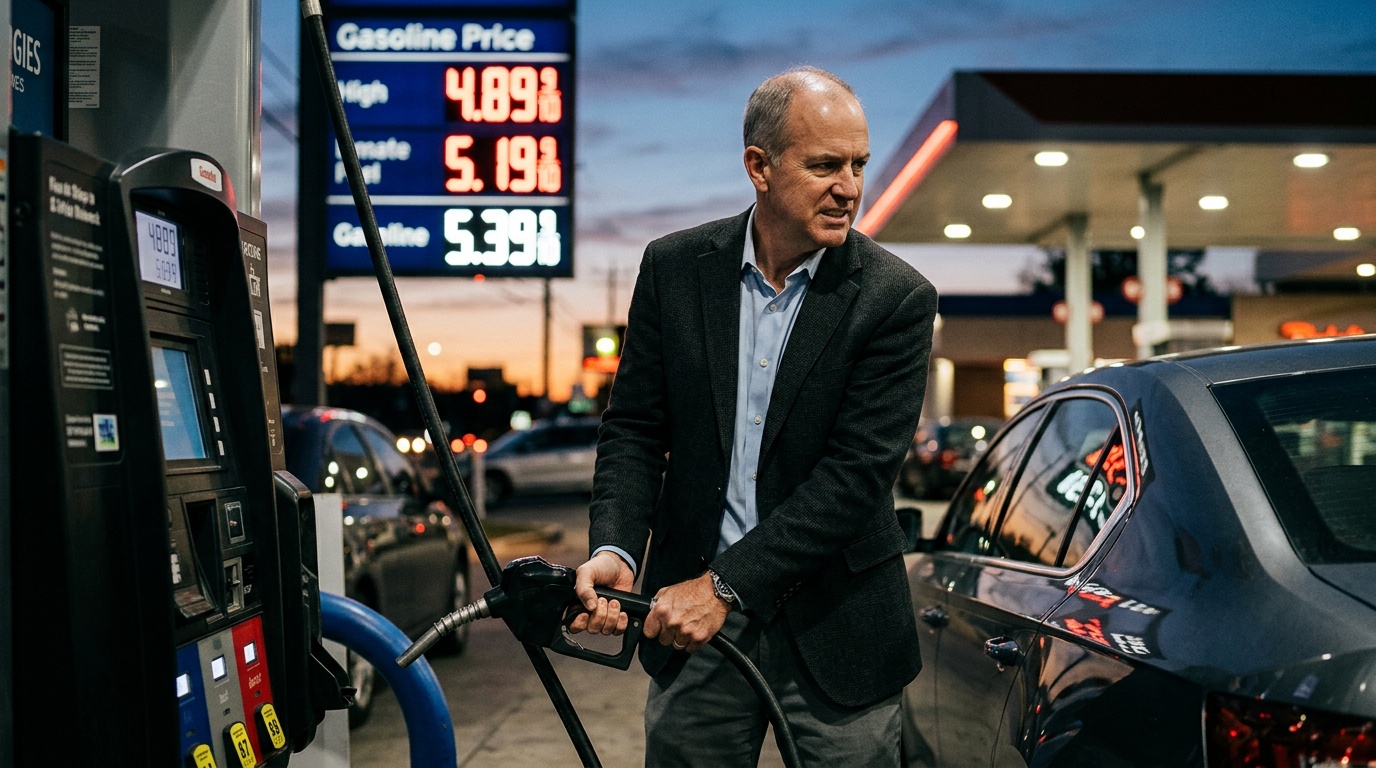
So, what does this "off-ramp" look like in practice? Scaramucci sketched out a sequence aimed at calming jittery energy markets: reopening a key shipping strait, organizing naval escorts involving France and the U.S., and establishing an insurance backstop. The goal? To help bring crude oil prices down. The key constraint, he notes, is straightforward: oil flows don't normalize until the fighting stops.
He tied this market sensitivity to a specific timeline, referencing a claim from investor Mike Novogratz that the conflict could be "broadly finished" within a week. Scaramucci added that, in his view, Trump could label that outcome a win and spark a rally so sharp it would look "like that was the plan all along."
That idea—a narrative shift snapping prices higher—fits into Scaramucci's broader framework from his bear-market commentary. He's said he's lived through nine bear markets and has seen investor mood swing past what fundamentals justify. Bottoms can form while pessimism is still loud, he argues, precisely because many investors are already positioned too cautiously and have no more ammunition to bet on further declines.
Geopolitical Tensions Impacting Energy Prices
Of course, the plan hinges on things not getting worse. In earlier statements, Scaramucci had warned that a U.S. strike on Iran could significantly roil energy markets, potentially leading to a sharp spike in oil prices. He described a potential chain reaction where military action could prompt calls to lift limits on Russian oil, which he argued would ultimately benefit Moscow and complicate U.S. military operations in the region.
This backdrop highlights the extreme geopolitical sensitivity around energy supply, particularly concerning crucial global shipping channels. Such dynamics could throw a wrench into any narrative of a smooth market recovery, as energy prices remain a pivotal factor for economic sentiment.
Scaramucci's entire analysis leans heavily on energy as the transmission mechanism between geopolitics and markets. He outlined how escorts and insurance could help reduce the "risk premium" baked into oil prices if hostilities end. In his post, he argued that the market itself is the scoreboard to watch—it will tell you in real-time whether the political exit ramp is being taken. So, if you're wondering what happens next, maybe just watch the price of crude. According to Scaramucci, Trump certainly is.