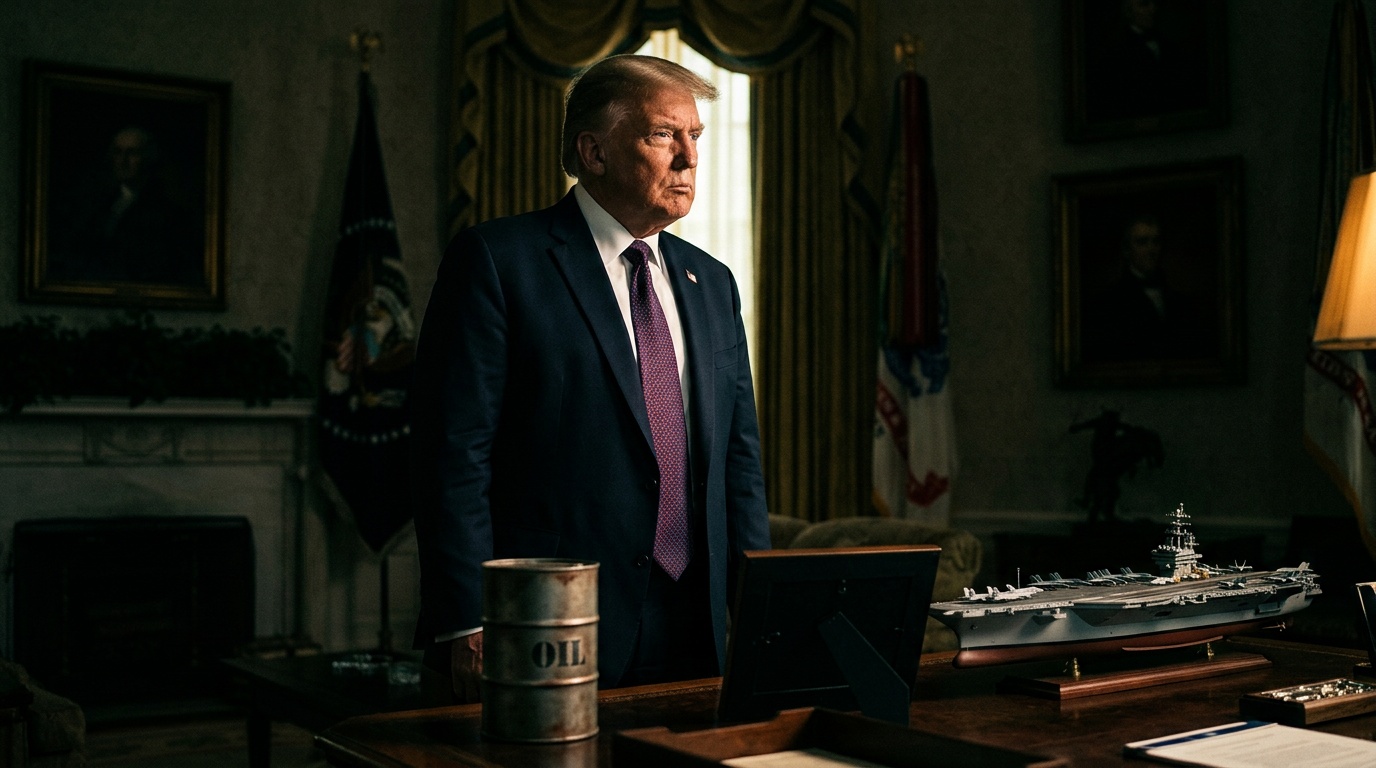
When you think portfolio insurance, you probably think boring things like Treasury bonds or cash sitting in a money market fund. Goldman Sachs has a different idea: barrels, tons, and ounces.
Commodities, according to the investment bank's latest outlook, are increasingly behaving less like cyclical trades tied to economic growth and more like actual portfolio protection. The reason? Supply chains are getting more concentrated, U.S.–China competition is intensifying, and geopolitical conflicts keep spilling into trade and resource markets.
Goldman strategists Daan Struyven and Samantha Dart highlighted what they call the "insurance value" of commodities, which now sit at the intersection of geopolitics, artificial intelligence buildout, electrification, and energy security. The result is a commodity market defined less by broad index moves and more by sharp divergence beneath the surface. Some materials become essential. Others quietly lose their leverage.
Gold: Not About Fear, About Sovereignty
SPDR Gold Shares (GLD) — the popular gold ETF — has climbed more than 65% in 2025, and Goldman still calls it their highest-conviction trade heading into 2026. But the firm isn't pitching gold as a hedge against inflation or financial panic.
Instead, they point to structural demand from central banks, especially in emerging markets. Ever since Russian reserves were frozen in 2022, reserve managers worldwide have been rethinking geopolitical risk in very practical terms. Gold, unlike foreign currency reserves parked in another country's banking system, carries no counterparty risk. You own it, period.
That shift has kept central bank buying strong, and Goldman expects it to continue through 2026. Struyven noted that central banks are now buying about 70 tonnes per month on average — close to the 66 tonnes seen over the past year, but roughly four times the 17 tonnes monthly average before 2022.
If private investors start reallocating even modest portions of their portfolios back to gold, that creates upside risk to Goldman's already bullish view. The bank expects gold to reach $4,900 by the end of 2026.
In this framework, gold isn't about fear. It's about sovereignty and insurance in an increasingly fragmented global system where financial assets can be frozen for political reasons.
Copper vs. Aluminum: Same Transition, Opposite Problems
Industrial metals tell a more complicated story, and not all of them are positioned the same way.
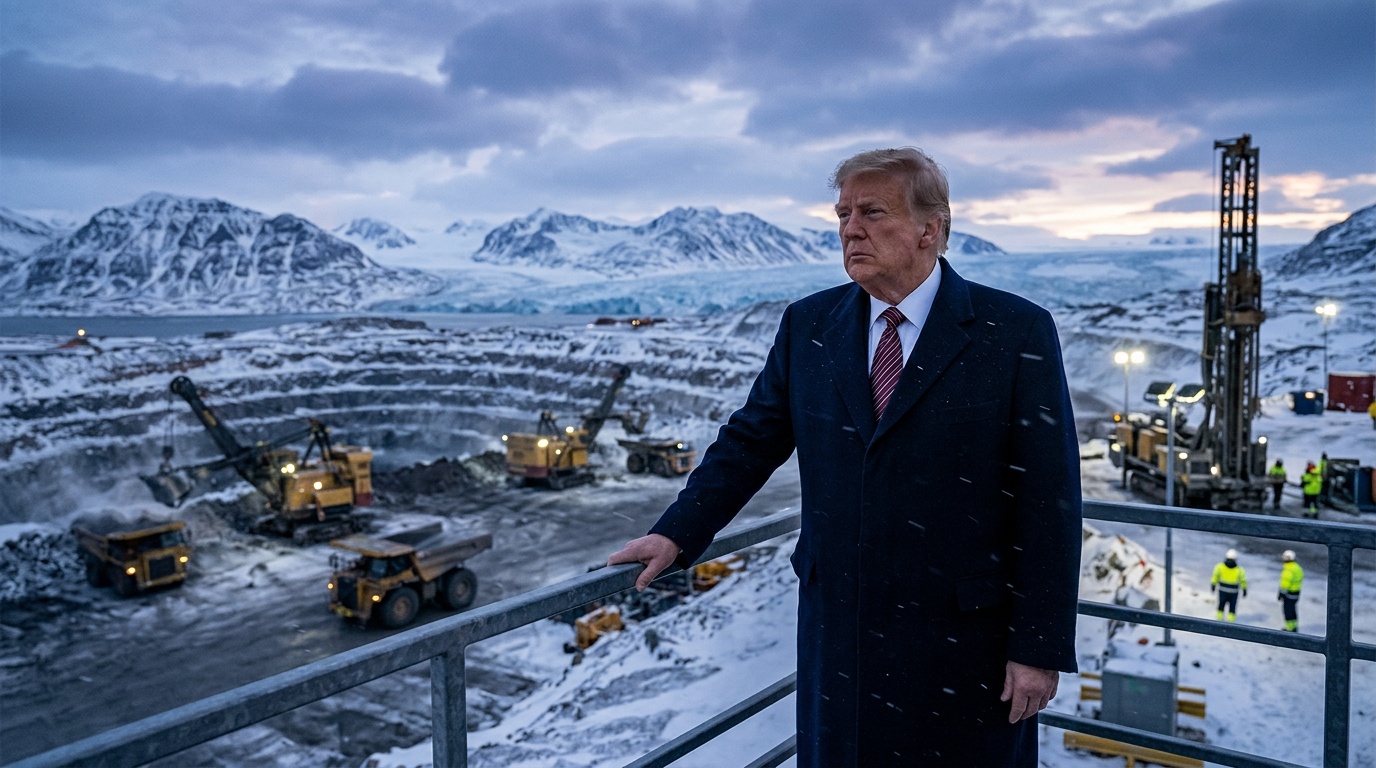
Copper is Goldman's preferred long-term metal. Demand comes from electrification, power grid upgrades, AI infrastructure, and defense spending. The problem is supply. Copper mines take years to develop, and production struggles to respond quickly when demand surges. That structural bottleneck keeps copper attractive.
The United States Copper Index Fund (CPER) has jumped 33% in 2025, its best year since the fund launched. Goldman expects that strength to continue as the supply-demand mismatch persists.
Aluminum, meanwhile, faces the opposite problem. Large-scale capacity expansions — driven largely by Chinese overseas investment — risk pushing supply ahead of demand. Despite aluminum's role in the energy transition, Goldman expects prices to lag copper meaningfully. Too much capacity coming online too fast tends to do that.
Energy: The Big Supply Wave Cometh
Energy markets are being reshaped by supply waves moving at very different speeds, and not all of them are bullish.
Goldman expects oil markets to remain oversupplied through much of 2026 as the final phase of a major production wave weighs on prices. That keeps downside pressure on crude in the near term, even though longer-term balances should eventually tighten later in the decade.
"We forecast Brent/WTI to decline further to 2026 averages of $56/$52 (vs. $59/$56 forwards) as the last big supply wave leaves the market in a 2.0mb/d oversupply," Goldman said.
Natural gas and LNG are entering what Goldman describes as the largest supply expansion in history. With global LNG capacity set to surge through the early 2030s, European and global gas prices are expected to face sustained pressure.
Here's the ironic twist: this global glut may actually tighten U.S. gas markets as exports rise, creating a growing divergence between domestic and international pricing. Goldman expects lower European gas (TTF) and global LNG prices relative to U.S. gas prices next year. This will tighten the TTF-Henry Hub spread from $8.40/mmBtu this year to $5.40/$3.05 in 2026/27.
Translation: America exports so much gas that domestic prices could rise even while global prices fall. That's the kind of market dynamic that makes commodity trading interesting.
The Hidden Commodity: Electricity Itself
Perhaps the most underappreciated constraint in Goldman's outlook isn't a traditional commodity at all. It's electricity.
The rapid expansion of AI-driven data centers is pushing U.S. power demand growth above GDP growth for the first time in decades. That's tightening regional grids and raising the risk of price spikes and reliability issues.
"A majority of US regional power markets are already at or below critical spare capacity levels based on our estimates," Struyven said.
Unlike China, which continues to add power capacity at massive scale, the U.S. faces infrastructure bottlenecks that could slow technological progress if the grid can't keep pace with AI buildout. Elon Musk recently called China's power capacity advantage a "major competitive disadvantage" for the United States.
In this sense, power availability becomes a new form of commodity scarcity — one that could shape both economic growth and geopolitical competitiveness. You can have all the chips and data centers you want, but if you can't plug them in reliably, it doesn't matter.
A Market Defined by Differentiation
Goldman's 2026 outlook makes one thing clear: commodities can no longer be treated as a single macro trade that rises and falls with global growth.
Geopolitics, supply concentration, and technological change are creating winners and losers across metals, energy, and power markets. Gold benefits from central bank diversification. Copper wins from supply constraints. Aluminum loses to excess capacity. Oil faces oversupply. Gas markets diverge regionally. And electricity becomes a binding constraint on technological progress.
The real challenge for investors isn't predicting whether commodities will rise or fall as a group. It's identifying which specific materials become essential — and which quietly lose their leverage — in a world increasingly defined by competition for technological power, national security, and economic resilience.
That differentiation is exactly what makes commodities look less like a cyclical bet and more like insurance. Just not the boring kind.