Your S&P 500 Fund Owns 500 Big Companies, Not the Whole Market
MarketDash Editorial Team
Author
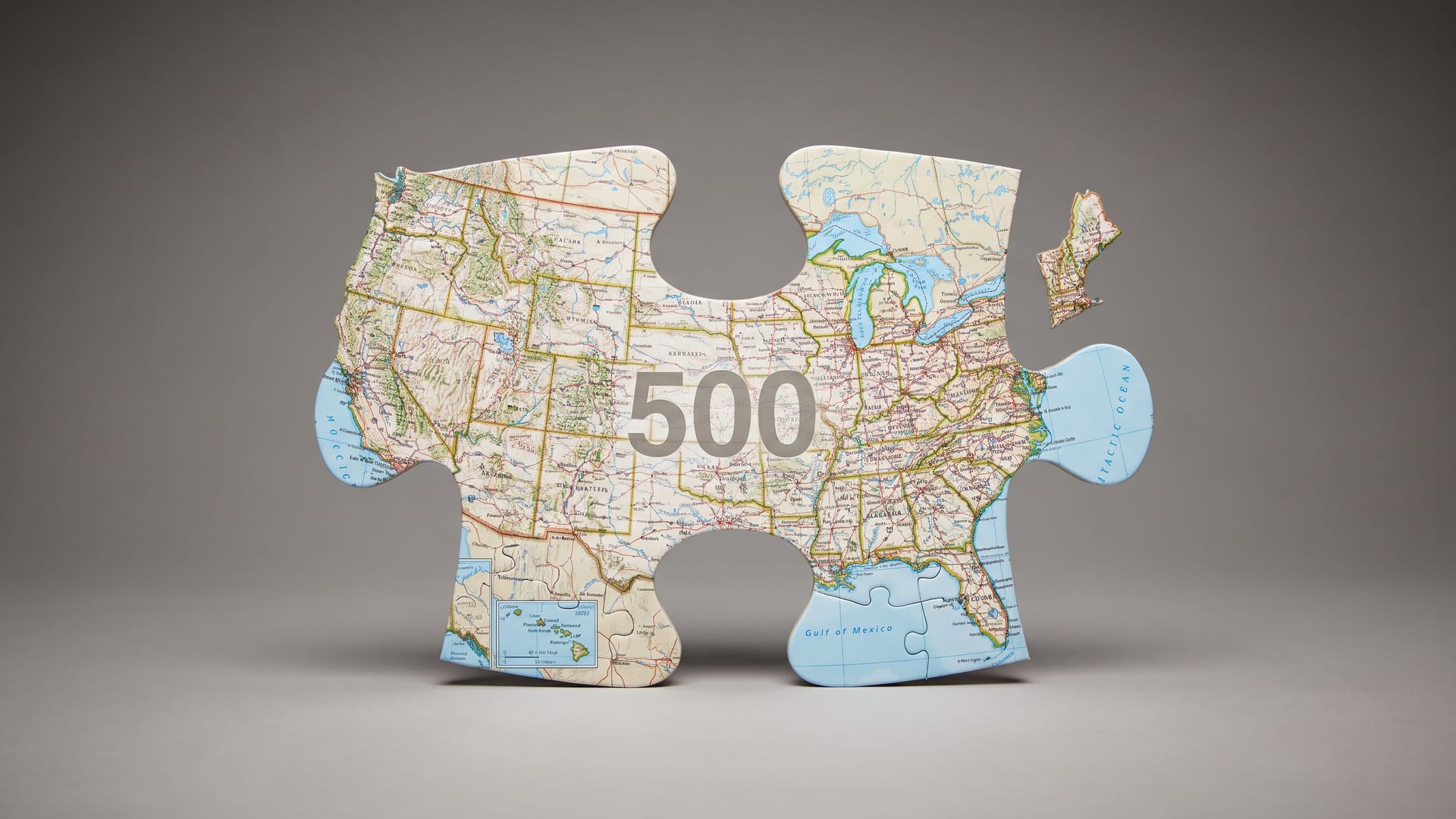
"The market" is a nickname, not a description
When a 401(k) brochure or a news anchor says "the market," they usually mean the S&P 500: an index of the largest US companies. It is a genuinely great product and a genuinely terrible shorthand. Own it and you own big American companies. That's it. Not smaller US companies. Not companies headquartered in Tokyo, London, or São Paulo.
That's not a scandal. It's a gap, and gaps only hurt when you don't know they're there. Someone who owns a single S&P 500 fund and believes they own "everything" has made a large, concentrated bet on large US companies without ever writing the bet down. A total-market fund buys across the whole US market: the giants, the small companies, and the unglamorous businesses in the middle. A global fund does the same trick outside the US.
Here's the part people miss. An index only holds a company after it is already big. The next giant is sitting somewhere as a small company, and you cannot tell which one it is. Neither can I. Neither can the analyst with the nice suit and the price target. Owning the whole room is how you stop needing to guess.
You can't pick the winning slice, so own the room
Nobody knows which slice of the market wins next, which is exactly why the argument for holding all of it is so strong. Diversification is a bet on your own ignorance, and it is the rare bet where admitting you don't know pays you.
Take a clear side here: if you own only an S&P 500 fund, add small-cap and international exposure. Not because those slices will beat big US companies. Nobody knows that, and anyone who says they do is selling something. Add them because the whole point of index investing is that you have stopped forecasting.
There is a real cost, and it isn't a fee. Some years you will watch the S&P 500 beat your more complete portfolio and feel like the person who brought a salad to a barbecue. That feeling is the price of admission. You do not get diversification without occasionally looking foolish.
The overlap trap
Now the part that stings. Your funds may be holding the same companies.
A single giant company can sit inside an S&P 500 fund, a total-market fund, and a "growth" fund at the same time. Your statement shows a sensible spread of funds. Your money shows one concentrated bet on a short list of very large businesses, repeated. The fund count flatters you; the holdings tell the truth.
The fix takes a single sitting. Pull up the top holdings of each fund you own and write the names in a single list, marking every repeat. The repeats are your real portfolio. If the same handful of companies keeps appearing, you are far less spread out than your account page suggests, and no amount of adding another fund will change that until you look.
Fees are the small print, not the whole argument
The usual pitch for the S&P 500 is that it's cheap. Cheap is good. Cheap is not the same as complete, and the fee math cuts in an interesting direction.
Start with $10,000 and add $500 a month for 30 years, growing at 8% a year before taxes and fees. Pay a 0.05% yearly fee and you end with about $845,000. Pay a 1% yearly fee and you end with about $691,000. That higher fee costs you about $154,000, which is not a rounding error: it's a kitchen remodel and a used car.
At 8% a year, money doubles roughly every 9 years (divide 72 by the return, if you like shortcuts). Costs compound quietly in the background. So do gaps in what you own. You read the fee on the label, easy. You have to open the holdings to spot the gap, and almost nobody does.
Check it yourself in MarketDash
Open the Screener and look at the Market Cap column. Market cap is the price tag the stock market puts on an entire company, and scanning that column shows you the shape of the market: an enormous cluster of giants at the top, then a long tail of smaller businesses most people never hear about.
If every fund you own lives at the top of that list, you now know exactly what you bought, and you can stop calling it everything. Then go find the tail. That is the whole edge: not a hot stock, not a forecast, just a clear-eyed look at the parts of the market you quietly left out.
Get Market News Alerts
Real-time alerts on price moves, news, and trading opportunities.
Join 20,000+ investors. No spam, ever.
Featured Articles
View all news
Amazon's Q3: A Double Miss, But AWS Is Growing Like It's 2021 Again

Alphabet's $470 Billion Wipeout Meets a Small-Cap Party: Thursday's Market Split
Intel Beats Q3 Estimates, Then Spooks Wall Street With Weak Q4 Guidance

US Economy Grew 3.4% in Q3, Fed's Favorite Inflation Gauge Matches Forecasts

Dan Ives Calls Microsoft the AI 'Barometer' as Azure Growth Hits 48%
Nvidia CEO Jensen Huang Was Reportedly Targeted By A Chinese Intelligence Asset, And Trump Was Briefed

DoorDash Drops $17 Billion on Instacart, and Your Grocery Bill Might Notice