






Your $500 a Month Can Grow to $344,000. A Stock You Own Too Much Of Can Undo It
MarketDash Editorial Team
Author
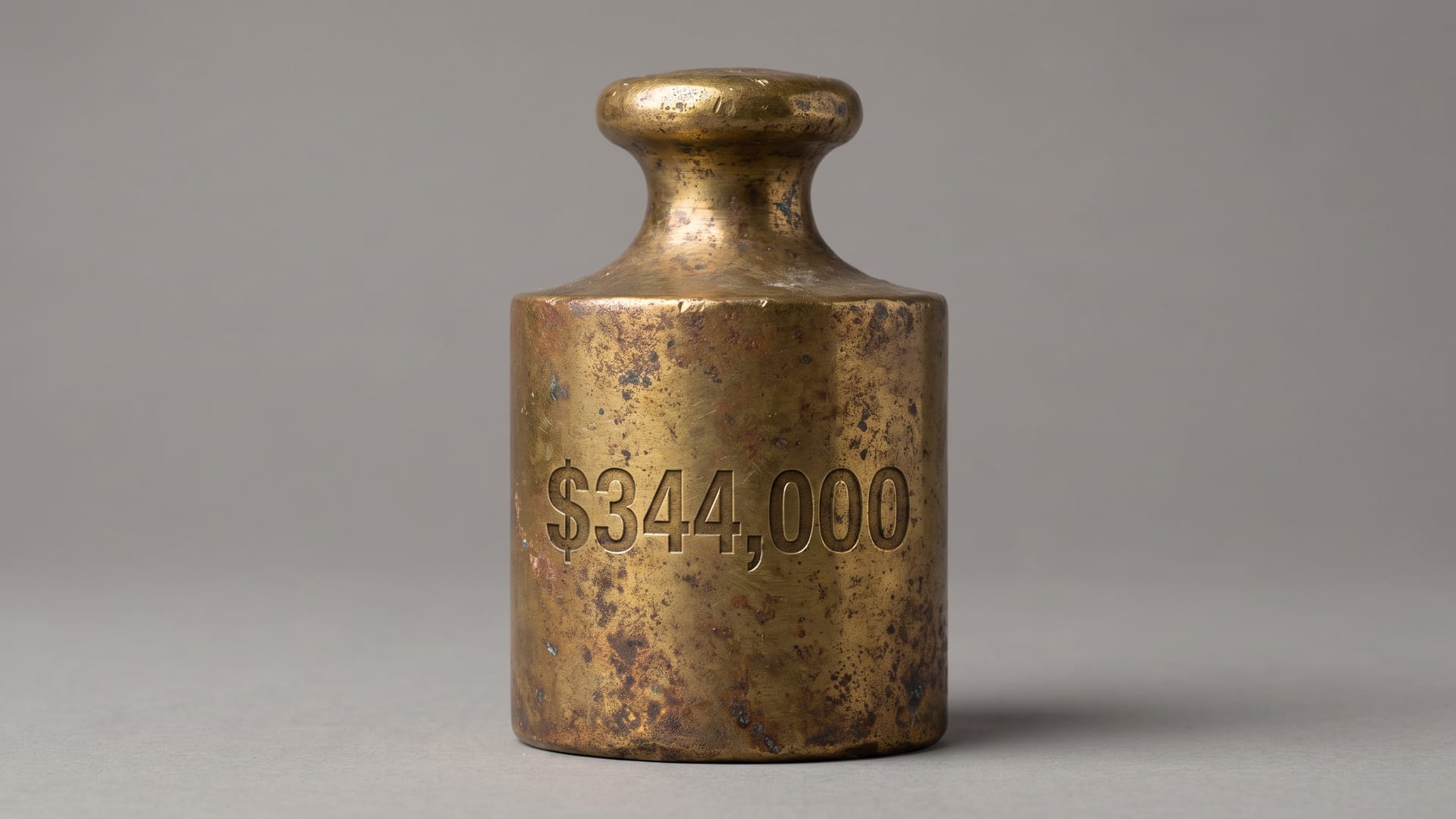
You put $10,000 into a boring fund and add $500 a month for 20 years. At 8% a year, before taxes and fees and not adjusted for inflation, you end with $343,778. Split that up: $130,000 came from you, and $213,778 came from time.
Sit with that split. The money you contributed is the smaller piece of the pile. The bigger piece is what happened while you were doing other things. Which means the fastest way to ruin a good investing life is not buying a bad stock. It's buying a good one, sizing the bet like a hero, and letting one bad stretch take the patient money with it.
You're not picking a stock, you're picking a bet size
Same company, two owners. One holds it as a sliver of the portfolio. The other holds it as "this is my retirement." If the stock doubles, the first owner feels clever for a week and goes back to work. The second owner's life changes. Same stock, same news, completely different outcome, because the bet was different.
That's the whole point of sizing. It's the dial you actually control. You cannot control whether the next big holding becomes the next big thing. You can control how much of your future depends on the answer.
The sleep test beats every spreadsheet
If a holding keeps you up at night, it's too big. Not because your worry is accurate, but because worry changes behavior. The real danger isn't the drop. It's you at the drop, holding a phone, deciding at the worst possible moment that you can't take it anymore.
So size the position for the version of you that will exist during a bad stretch. The test is simple: can you imagine this holding going to zero without changing your plans? Your rent, your retirement date, the money you promised someone else. Not "would I be sad." Sad is fine. Sad doesn't sell.
This is the awkward part. The size that makes a single stock worth owning is also the size that can hurt you. You need enough to matter and little enough to survive. Most people get the first half right and treat the second half as a personality flaw.
Getting back takes longer than losing
The rule of 72 is the one piece of math worth memorizing: divide 72 by a yearly return and you get roughly how many years it takes money to double. At 8% a year, about nine years.
Nine years. That's what a broken position really costs you. Not just the dollars, but the doubling they would have done while you were busy living. A concentrated bet is a bet on time, and time is the one input you cannot add more of later. Someone with decades of saving ahead can absorb a wipeout and keep going. Someone closer to needing the money cannot. That's not a character judgment. It's arithmetic.
Your portfolio has one job
The 4% rule comes out of research in the 1990s (William Bengen in 1994, and the Trinity study in 1998). It found that taking out 4% of a stock-and-bond portfolio in the first year of retirement, then raising that amount with inflation, lasted at least 30 years in most historical periods. Flipped around, it becomes a savings target: 25 times your yearly spending. Spend $50,000 a year and you need $1,250,000, about $1.3 million.
Now use that as the sizing rule. Your portfolio's job is to reach 25 times your spending and stay there. A single holding large enough that its failure knocks you below that number is too big, no matter how good the story is. A holding so small that it can't move the number at all is a hobby, not an investment.
The tax code will try to talk you out of trimming. Pulling money out of a traditional IRA or 401(k) before 59½ usually means income tax plus a 10% penalty, with some exceptions. That's a real cost, but it is not a reason to keep a position you would otherwise cut. Decide the size first, then find the cheapest way to get there. Roth accounts are funded with money that was already taxed, and qualified withdrawals in retirement are tax-free, so where the money sits changes the price of fixing a mistake.
Check it yourself in MarketDash
Pick the biggest single stock you own. Not the one you like most. The one that would hurt most.
Open its stock page and find the Intrinsic Value section. It shows an estimate built from a discounted cash flow and a comparison with similar companies. Hold that estimate next to the price. The gap between them is the story part, the piece of the price you are really betting on. A large position in a stock priced far above its intrinsic value is not conviction. It's a bet on a story, and it should be sized like one.
Then check the Wall Street section, where each analyst's rating, price target, upside, and date are listed. Look at the dates. A price target from months ago is a guess about a company that has since moved on. The PE ratio is worth a glance too (the share price divided by a year of profit per share), and the Seasonality section shows how the stock has done in each month historically. Interesting. Not a reason to oversize anything.
Last step, and the only one that counts: write down the dollar amount you could lose without changing a plan. That number is your cap. Now compare it with what you actually own.
Get Market News Alerts
Real-time alerts on price moves, news, and trading opportunities.
Join 20,000+ investors. No spam, ever.
Featured Articles
View all news
Chip Stocks Just Had Their Worst Day Since 2020: 28 of 30 Biggest Names Are in a Bear Market

'It Wasn't Republicans, It Was Dumocrats': Trump Blames Democrats as $3 Trillion Vanishes From Stocks
Nvidia Wipes Out $1.39 Trillion Since October Peak — Jim Cramer Says NVDA Can 'Buy and Reload'
Fear Trade Explodes: VIX Jumps 39% As $2.2 Trillion AI Rout Sends Volatility ETFs Soaring

Airbnb Stock Jumps 10% After Q3 Double-Beat: 'Back In Growth Mode'

Cloudflare Stock Jumps After Q3 Beat: CEO Calls It 'Best Quarter Ever'

Beyond AI ETFs: 4 Investment Themes Wall Street Could Bet on After Midterms