


Why a 1% Fund Fee Costs You $154,000
MarketDash Editorial Team
Author
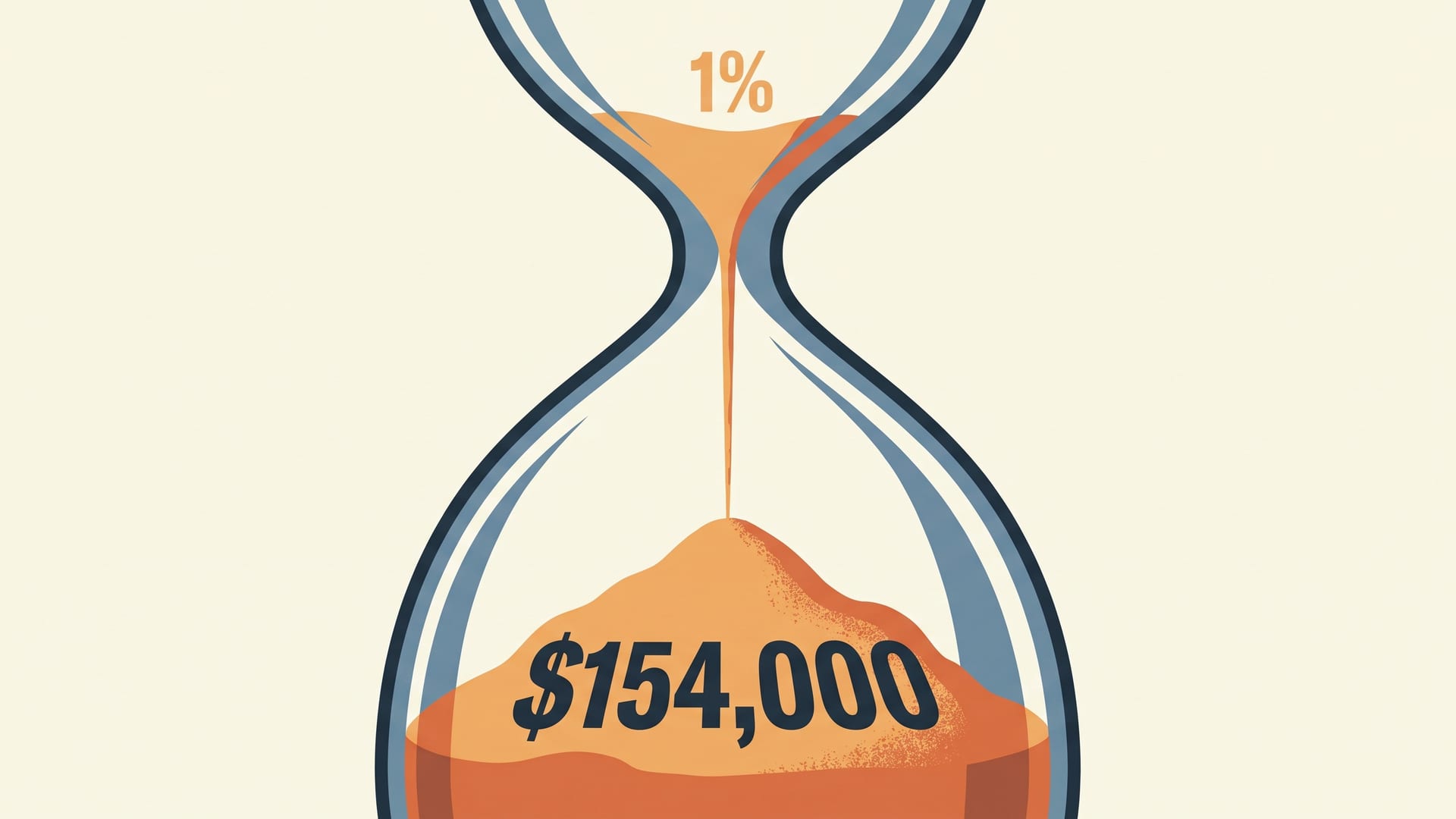
The gap between the two funds is smaller than the argument
Start with $10,000, add $500 a month for 30 years, and earn 8% a year before fees. With a 0.05% yearly fee you end with about $845,000. With a 1% yearly fee you end with about $691,000. The fee alone costs about $154,000.
Now consider the question that eats a surprising number of evenings: S&P 500 fund or total-market fund? Those two are near-twins. Spending an hour choosing between them while ignoring the fee is like spending an hour choosing a restaurant and then paying a cover charge to sit down.
An S&P 500 index fund (a fund that simply buys everything in the S&P 500, an index of large American companies) owns big companies. A total-market fund owns those same companies plus thousands of smaller ones. Both weight their holdings by size, so the giants dominate both. The small stuff is a thin slice.
That thin slice is real diversification: a little more of the economy in the boat. If smaller companies run hot for a long stretch, the total-market fund keeps more of it. If the giants keep winning, the difference is small enough to ignore. Buying both funds is like ordering two identical sandwiches and calling it variety. Pick one. Either is a reasonable answer, which is exactly why it deserves about ten minutes of thought.
The fee is the part you actually choose
A fund's yearly fee (the expense ratio) is the slice it skims off your money each year, quoted as a small percentage. Cheap broad index funds charge a tiny fraction. Funds where a manager picks stocks usually cost more, sometimes a lot more.
A 1% fee sounds like a rounding error. It behaves like a rent check on your own savings, collected every year, including on the growth. At 8% a year, money doubles roughly every 9 years (divide 72 by the return, the old rule of 72). A fee shaves the return, which pushes each doubling later, and the doublings you lose are what that $154,000 is made of.
Then glance at every other yearly percentage in your account: the advice fee, the account fee, the managed wrapper around the fund. Each one is a rent check too, and they stack.
Your savings rate beats your shopping
$10,000 plus $500 a month for 30 years, growing 8% a year before taxes and fees and not adjusted for inflation, ends at about $855,000. You put in about $190,000. The growth on top is about $665,000. Most of the ending pile is money the market earned for you, but every dollar of that growth sits on a dollar you actually saved.
So the lever with the most leverage is the boring one: the amount that leaves your checking account every month. Raising it raises the base everything grows from. The fee is the second lever. The fund choice is a distant third. You can build a beautiful spreadsheet comparing two near-identical funds. The spreadsheet will not add a dollar.
Automate the contribution. Make the decision once, on a calm day, instead of every month on a day when the market is loud. Then leave it alone.
Check it yourself in MarketDash
Open the Screener and look at the Market Cap column (market cap is the total value of a company's shares). A small group of companies is worth more than almost everything else on the list combined, and those are the same giants sitting at the top of both an S&P 500 fund and a total-market fund. That is the overlap, visible in one column, and it is why the two funds travel together.
Then do the two-minute version: write down your fund's yearly fee and your automatic monthly contribution. If the fee looks closer to 1% than to nearly nothing, a broad, cheap index fund is the swap worth making, and it is worth making because of that $154,000. Assumptions: $10,000 to start, $500 a month, 8% a year before fees, and the gap between a 0.05% yearly fee and a 1% yearly fee. The market does the rest.
Get Market News Alerts
Real-time alerts on price moves, news, and trading opportunities.
Join 20,000+ investors. No spam, ever.
Featured Articles
View all news
Nasdaq 100 Jumps 2% After Historic AI Rout, Payrolls Smash Forecasts
NVIDIA Bounces Back After $400 Billion Wipeout, but the AI Jitters Are Far From Over
AI Bubble Fears Erupt After Midterms: Top Tech Investor Warns Most Neoclouds Could Go to Zero
AI Data Center Stocks Got Crushed After the Midterms. Bernstein Says the Panic Is Overblown
Lam Research Drops $25 Billion Buyback Bomb, Stock Jumps 11%
Micron Stock Jumps 8% Friday: Memory Prices vs. AI Spending Fears
VIX Spikes 70%: History Says the S&P 500 Usually Bounces Within a Month