






Put $300 a Month Into Your HSA and Retire With $458,000
MarketDash Editorial Team
Author
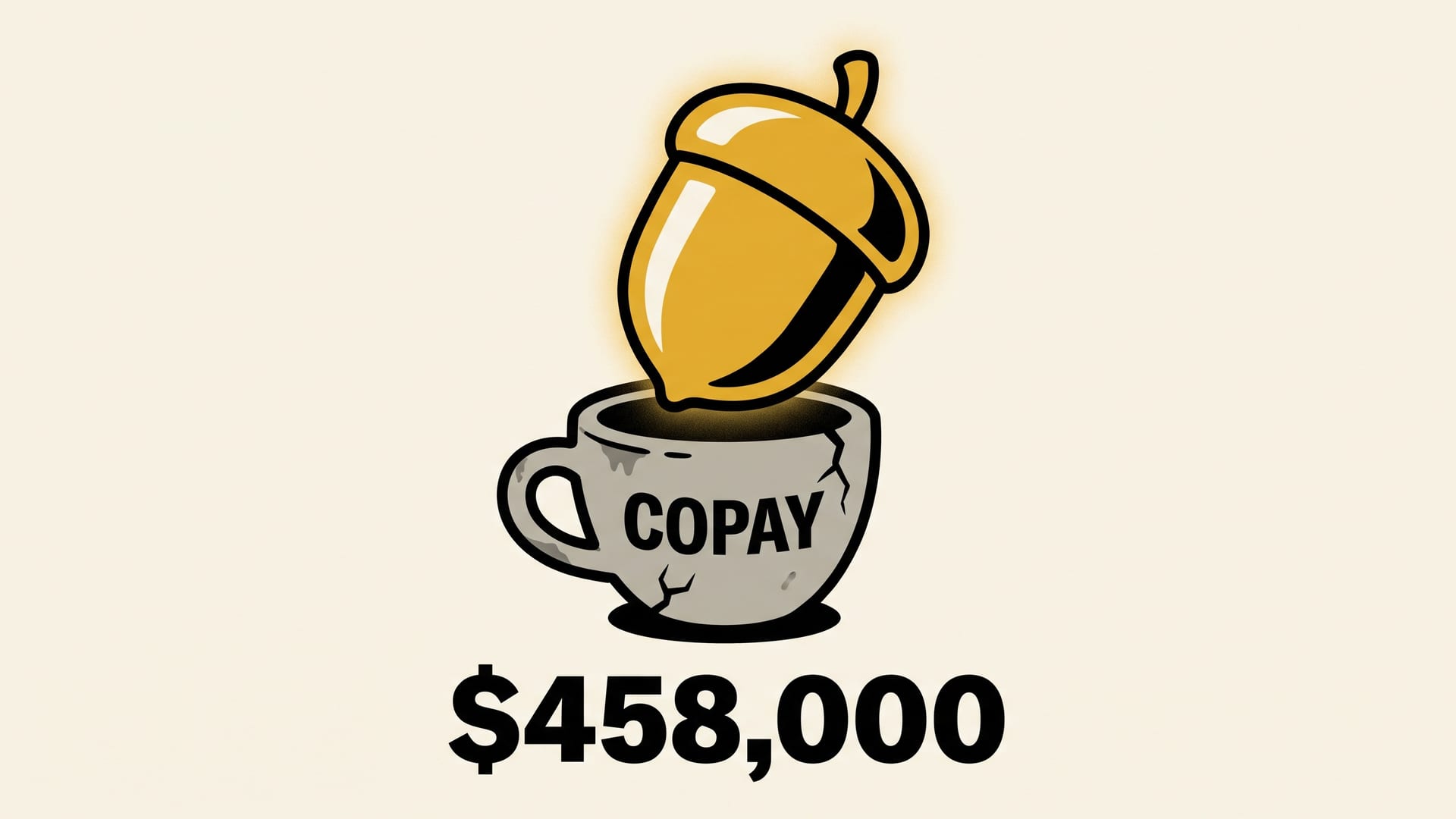
You're probably using it wrong
Most people treat a health savings account like a debit card for bandages. Money goes in, money comes out at the pharmacy counter, and the balance returns to something sad. That is the least interesting way to use the best-taxed account most people will ever get access to.
Here is the deal. An HSA is available if you're covered by a qualifying high-deductible health plan. Money you put in is deductible, so it comes out of your pay before income tax. It grows without being taxed along the way. And when you take it out for medical costs, it's tax-free.
No other account does all of that. A traditional 401(k) or IRA gives you the deduction up front, but you owe income tax when you withdraw. A Roth account gives you the tax-free withdrawal, but you funded it with money that was already taxed. The HSA skips the tax at both ends and skips it on the growth in the middle.
Which raises the obvious question: why is everyone spending it?
Pay the bill, keep the receipt
Because the money is sitting right there and the copay is due, and using it feels tidy. It isn't. Every dollar you spend from the HSA is a dollar that never grows tax-free for decades.
So flip the order. Pay small medical bills from your regular checking account, the one with no tax magic attached. Let the HSA invest in the stock funds on the plan menu. Then treat the account like what it actually is: a retirement account with a medical department.
Run the boring math. Start with $1,000, add $300 a month for 30 years, and earn 8% a year before taxes and fees. You end at $458,044. You put in $109,000. The other $349,044 is growth. That is the entire game, and in the HSA version of it, the growth never gets taxed. (Handy shortcut: divide 72 by your yearly return to estimate doubling time. At 8% a year, that's about 9 years.)
Now the part people skip. You can reimburse yourself for a medical bill long after you paid it, as long as you kept proof. There's no deadline on paying yourself back for an old out-of-pocket cost. Confirm the edges with the plan and a tax pro, because there are edges.
So the routine becomes: pay the bill from checking, drop the receipt in a folder, let the HSA compound. Years later, take the money out tax-free against that old bill, or just leave it to cover medical costs in retirement. Deduction going in, untaxed growth in the middle, no tax coming out. The folder is the whole trick, and it's the first thing people abandon. Scan the receipts. Name the files by year. A blurry photo of a dentist bill from years ago is worth real money.
Fees quietly eat the edge
HSAs are often small accounts parked at big institutions, and small accounts get charged. A monthly maintenance fee. A fee for not keeping enough in cash. A fund menu that costs more than the plain index funds you'd buy anywhere else.
That matters more than it sounds. Same plan: $1,000 to start, $300 a month for 30 years, 8% a year before fees. At a 0.1% yearly fee you end with $448,749. At 1.2% a year you end with $359,517. The higher fee costs you $89,232. Nobody ever sends you a bill for that. It just quietly fails to show up.
Before you commit, get the fee sheet and ask three questions. What does the account charge per month? What does the investment menu cost? Can I invest the balance, or is it stuck in cash? A cheap HSA you can invest is a retirement account. An expensive HSA stuck in cash is a savings account with nice printing.
Cash feels safe and isn't
Keeping everything in cash feels prudent in a health account. But cash loses ground. At 3% inflation a year for 20 years, something that costs $1,000 ends up costing $1,806, and $1,000 left in cash buys only what $554 buys at the start. Hiding in cash isn't caution. It's a slow leak.
Keep enough cash in the HSA to cover your deductible, so a real medical bill never forces you to sell investments at a bad moment. Invest the rest.
Do this next
Check three things before you treat your HSA like a retirement account.
Eligibility: you need a qualifying high-deductible health plan, and being on Medicare or covered by another non-qualifying plan can rule you out. Read the plan documents, not a blog. Fees: get the numbers in writing and compare them to a cheap brokerage. Receipts: start the folder, back-fill what you can, and keep scanning.
Then set the contribution, invest it, and more or less forget the account exists. The best retirement account you own may be the one you've been using to buy cough syrup.
Get Market News Alerts
Real-time alerts on price moves, news, and trading opportunities.
Join 20,000+ investors. No spam, ever.
Featured Articles
View all news
Dow Jumps 2.9%, Oil Craters 7% After Democrats Sweep Midterms

Bitcoin Climbs Back Above $80,000 as Ethereum, XRP and Dogecoin Join the Rally

Microsoft Stock Hits Record High as Midterm Sweep Reshapes AI Infrastructure Bets

AppLovin Crushes Q3 Estimates, Stock Jumps 16% After Hours

Blue Sweep Wrecks the Trump Trade: SpaceX, Tesla and Defense Stocks Slide

Gold, Silver Add $1 Trillion After Democratic Midterm Sweep: 4 ETFs to Trade as Rally Heats Up

Dan Ives: Democratic Sweep Could Kill 10% Of Planned US Data Centers