






A Low Fund Share Price Is Not a Discount. A 1% Fee Can Cost $158,000
MarketDash Editorial Team
Author
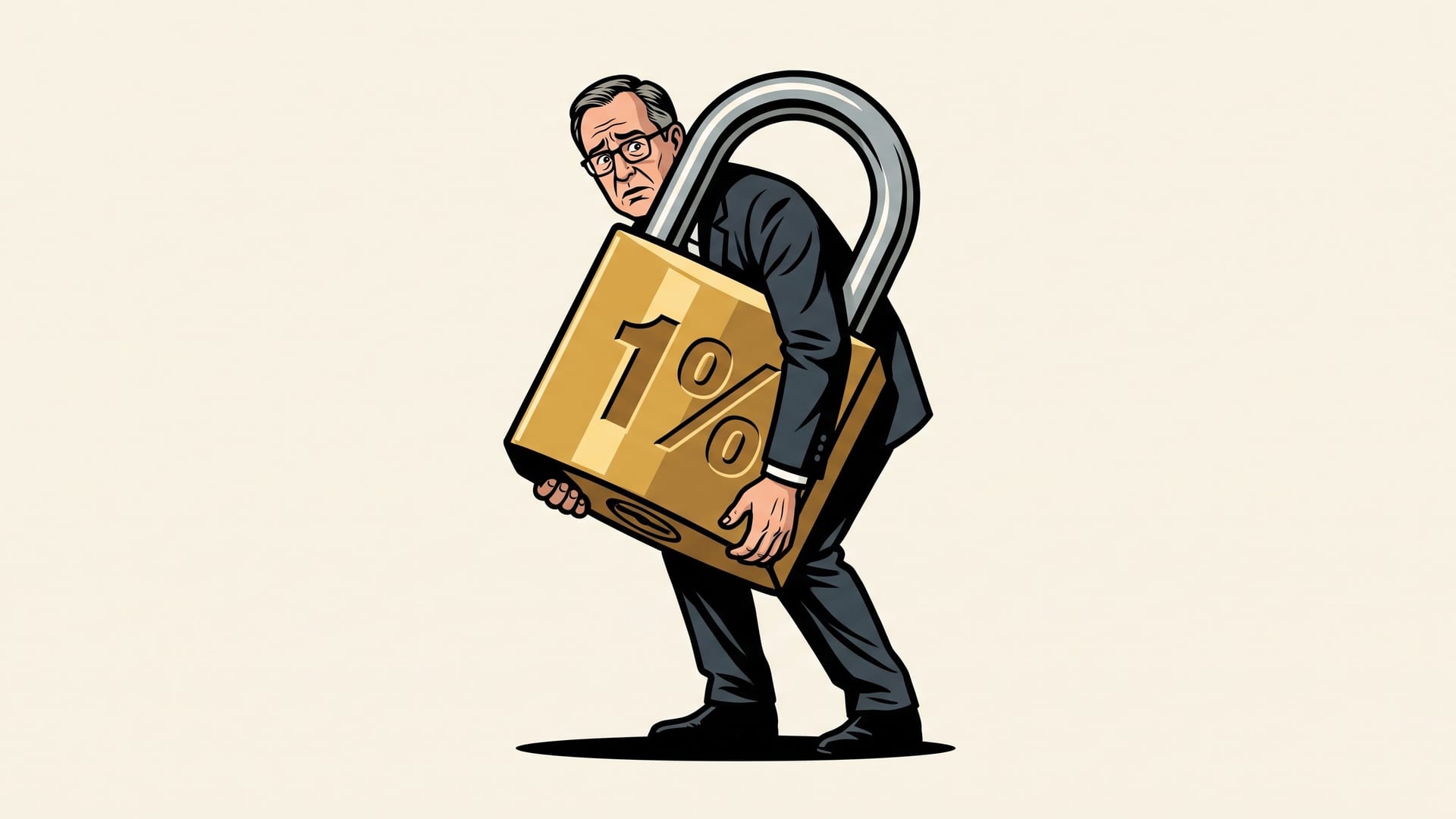
The number on the ticker is a package size
An exchange-traded fund (ETF) is a basket of investments that trades like a stock. You buy a share of the basket, and the basket owns the stuff inside.
Two funds can own nearly the same pile of companies. One trades for a small amount per share. The other trades for a much bigger amount. The cheap-looking one is not on sale. It is not a bargain. It is smaller. Those are different words for a reason, and mixing them up is one of the cheapest mistakes in investing to avoid, because avoiding it costs nothing but attention.
Here is where the share price comes from. A fund takes its pile of investments and cuts it into slices. Cut the same pizza into more slices and every slice costs less. You did not get more pizza, and nobody behind the counter owes you a discount. Fund companies pick a convenient starting price per share, and they can split shares later, which changes the number of slices and nothing else.
So a low number on the ticker tells you one thing: how thin the slice is. It says nothing about what the slice is worth.
What you actually pay is the expense ratio
The expense ratio is the yearly cut a fund takes to run itself, shown as a percent of your money. It comes out quietly, in good years and bad, before you ever see a return. This is the number that decides whether a cheap-looking fund is cheap.
Watch what a fee difference does over a working life. Start with $10,000 and add $500 a month for 30 years, with the money growing 8% a year before fees and before taxes. With a 0.03% yearly fee, you end at about $849,000. With a 1% yearly fee, you end at about $691,000. The higher fee costs you about $158,000.
Same 8% growth, same monthly deposits, same 30 years. The only difference is the fee. That is what "cheap" really means, and it has nothing to do with the price per share.
The lost money hurts more than it looks, because of the rule of 72: divide 72 by a yearly return to estimate how long money takes to double. At 8% a year, about nine years. Every dollar a fee takes never gets its chance to double, so the gap widens long after the fee was charged.
This is also why fees matter in retirement. If you plan to live on 4% of your portfolio in your first year of retirement (the old rule of thumb, which works out to saving 25 times your yearly spending), a 1% fee is a serious bite out of that income, taken before you buy groceries.
Same label, different groceries
Two funds with almost the same name can hold completely different things. One might follow an index that weights companies by size, another an index that screens for profitability, another an index from a different part of the world. An index is just a written rule: here is what to buy, and here is how much of each.
That rule matters more than the ticker price, and you can read it. Look at the fund's top holdings and ask one question: does this own what I think it owns? If you wanted a broad spread of large companies and ended up with a basket of one industry, the share price was never the problem. You bought the wrong groceries because you liked the font on the bag.
The other numbers on a fund's page describe the holdings, not the packaging. Dividend yield is a year of dividends divided by the share price. P/E ratio is the share price divided by a year of profit per share. Neither one gets better because the fund's shares are cheap.
The pricier fund can be the better buy
Here is the stance: the price per share should never be a tiebreaker. If two funds hold the same thing, cost the same, and charge the same, they are the same investment in different wrapping. If one charges 1% a year and the other charges 0.03%, the expensive one can cost you about $158,000 over the 30-year example above, and you will never see a bill for it. It will just feel like the market was unkind.
The pricier fund is not out of reach either. Many brokers let you buy by dollar amount instead of whole shares, so a high price per share does not decide how much you can invest. The number is a label, not a gate.
Your next step before you buy
For each fund you are considering, write down four things on one line: the expense ratio, the index it tracks, what it owns at the top, and what it would cost you in fees over the years you plan to hold it.
Then compare two candidates on those four things and ignore the price per share entirely. Judge a fund by what it owns and what it charges. The number on the ticker is just font size.
Get Market News Alerts
Real-time alerts on price moves, news, and trading opportunities.
Join 20,000+ investors. No spam, ever.
Featured Articles
View all news
S&P 500 Climbs Back From the Brink as Fed Beige Book Soothes Nerves; 10 Tech Stocks Stage Double-Digit Rebounds
AI Debt Fears Slam Nasdaq 100, Nvidia Drops 7% as Credit Markets Blink

Fed's Favorite Inflation Gauge Hits 3.8% as Expected, Q3 GDP Growth Revised Up to 4.3%

Trump Says a Government Stake in Nvidia Is 'Probably Not Too Late': 'Maybe I Should Do It'

AMD, Micron, Nvidia Lead AI Stocks Lower as Market Tumbles Into Thanksgiving

Micron Stock Slips 8% as Nvidia's Washington Headache Spreads to Chipmakers

Boeing Lands 787 Order From Malaysia And A $7.4B China Deal For 737s
