Marketdash

Oil Shock Rattles Markets as Political Leaders Clash Over Trump's Iran Stance

MarketDash
US Senate Majority Leader Chuck Schumer (D-NY) offers remarks on President Biden’s proposed 2024 budget
A sharp spike in oil prices following escalating tensions in the Middle East has sent stock futures tumbling and sparked a political firestorm over energy policy.

Get Market Alerts

Weekly insights + SMS alerts

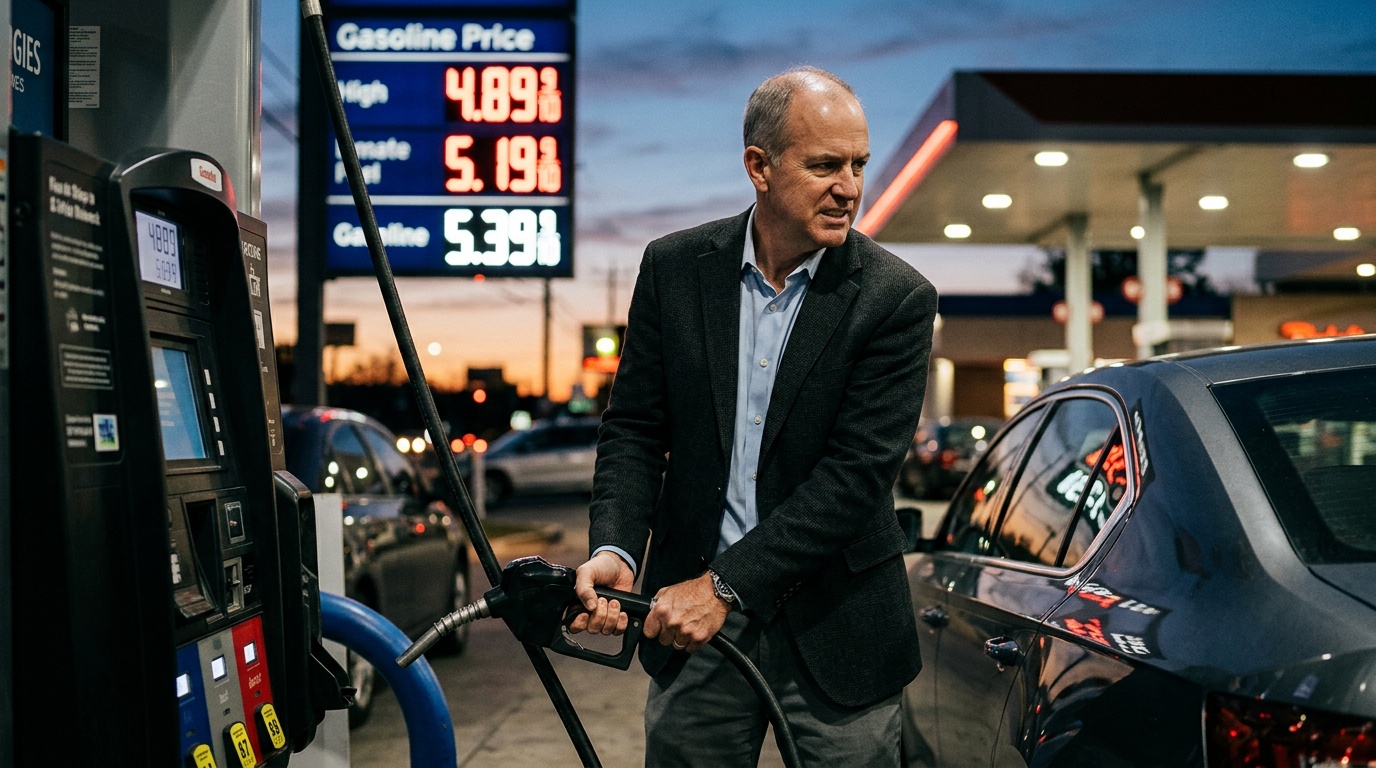
Here's what happens when geopolitical tension meets the gasoline pump: everyone starts yelling about oil prices. Over the weekend, a sharp spike in crude oil sent stock futures tumbling and kicked off a fresh political battle over who gets blamed for pain at the pump.

Senate Democratic leader Chuck Schumer (SPY) didn't mince words, taking to social media to call the situation "due to Donald Trump's reckless war of choice" and demanding the President release oil from the Strategic Petroleum Reserve "IMMEDIATELY." He noted gas prices have surged to their highest levels in years.

Meanwhile, CNBC's Jim Cramer was sounding the alarm for investors. "A sudden oil shock is always bad for stocks," he warned, adding a grim forecast: "I don't see a path to de-escalation."

So what's the President's take on all this? Essentially, a shrug. In a recent interview, Trump said of rising gas prices, "if they rise, they rise." He has resisted calls to tap the Strategic Petroleum Reserve—the nation's emergency crude stockpile, which holds up to 714 million barrels and was literally created for supply shocks like this. Past presidents have used it during wartime disruptions, but so far, this administration is holding the line.

The political theater didn't stop there. California Governor Gavin Newsom's office circulated a satirical image showing an "Iran war blend" gasoline price of $8.21 a gallon. And economist Peter Schiff chimed in, noting "Oil is now over $112 per barrel" and warning prices "can easily go much higher."

Behind the rhetoric, the market numbers tell a stark story. Oil prices jumped nearly 20% to about $108 a barrel—the highest since 2022—on fears that the widening U.S.-Israel-Iran conflict could choke off energy supplies. The ripple effect was instant and brutal: Dow futures fell 999 points, or 2.10%. In the commodities world, WTI crude for April 2026 surged over 27% to $116.03 per barrel. Even the U.S. Dollar Index rose 0.61%, a classic sign of investors fleeing to safety.

Analysts are now sketching out a worrying scenario. According to reports, if the conflict drags on, we could be looking at prolonged supply disruptions, a new wave of inflation pressure, and slower global growth. Goldman Sachs (GS) had previously estimated that a temporary rise in oil to $100 a barrel could shave 0.4 percentage points off global growth. With prices now blowing past that level, the economic calculus is getting uglier by the day.

So to recap: oil is spiking, stocks are tanking in the futures market, politicians are pointing fingers, and the guy in the White House is telling everyone not to worry about the price at the pump. It's a classic recipe for market volatility and political gridlock—and your portfolio is caught in the middle.


Oil Shock Rattles Markets as Political Leaders Clash Over Trump's Iran Stance

MarketDash
US Senate Majority Leader Chuck Schumer (D-NY) offers remarks on President Biden’s proposed 2024 budget
A sharp spike in oil prices following escalating tensions in the Middle East has sent stock futures tumbling and sparked a political firestorm over energy policy.

Get Market Alerts

Weekly insights + SMS alerts

Here's what happens when geopolitical tension meets the gasoline pump: everyone starts yelling about oil prices. Over the weekend, a sharp spike in crude oil sent stock futures tumbling and kicked off a fresh political battle over who gets blamed for pain at the pump.

Senate Democratic leader Chuck Schumer (SPY) didn't mince words, taking to social media to call the situation "due to Donald Trump's reckless war of choice" and demanding the President release oil from the Strategic Petroleum Reserve "IMMEDIATELY." He noted gas prices have surged to their highest levels in years.

Meanwhile, CNBC's Jim Cramer was sounding the alarm for investors. "A sudden oil shock is always bad for stocks," he warned, adding a grim forecast: "I don't see a path to de-escalation."

So what's the President's take on all this? Essentially, a shrug. In a recent interview, Trump said of rising gas prices, "if they rise, they rise." He has resisted calls to tap the Strategic Petroleum Reserve—the nation's emergency crude stockpile, which holds up to 714 million barrels and was literally created for supply shocks like this. Past presidents have used it during wartime disruptions, but so far, this administration is holding the line.

The political theater didn't stop there. California Governor Gavin Newsom's office circulated a satirical image showing an "Iran war blend" gasoline price of $8.21 a gallon. And economist Peter Schiff chimed in, noting "Oil is now over $112 per barrel" and warning prices "can easily go much higher."

Behind the rhetoric, the market numbers tell a stark story. Oil prices jumped nearly 20% to about $108 a barrel—the highest since 2022—on fears that the widening U.S.-Israel-Iran conflict could choke off energy supplies. The ripple effect was instant and brutal: Dow futures fell 999 points, or 2.10%. In the commodities world, WTI crude for April 2026 surged over 27% to $116.03 per barrel. Even the U.S. Dollar Index rose 0.61%, a classic sign of investors fleeing to safety.

Analysts are now sketching out a worrying scenario. According to reports, if the conflict drags on, we could be looking at prolonged supply disruptions, a new wave of inflation pressure, and slower global growth. Goldman Sachs (GS) had previously estimated that a temporary rise in oil to $100 a barrel could shave 0.4 percentage points off global growth. With prices now blowing past that level, the economic calculus is getting uglier by the day.

So to recap: oil is spiking, stocks are tanking in the futures market, politicians are pointing fingers, and the guy in the White House is telling everyone not to worry about the price at the pump. It's a classic recipe for market volatility and political gridlock—and your portfolio is caught in the middle.