So here's what happens when a major oil-producing region becomes a war zone: everything gets more expensive, and stock markets get very nervous. Over the weekend, the escalating conflict involving the U.S., Israel, and Iran sent crude oil prices screaming past $100 a barrel for the first time in years. Financial markets, which really don't like surprises, reacted about as well as you'd expect.
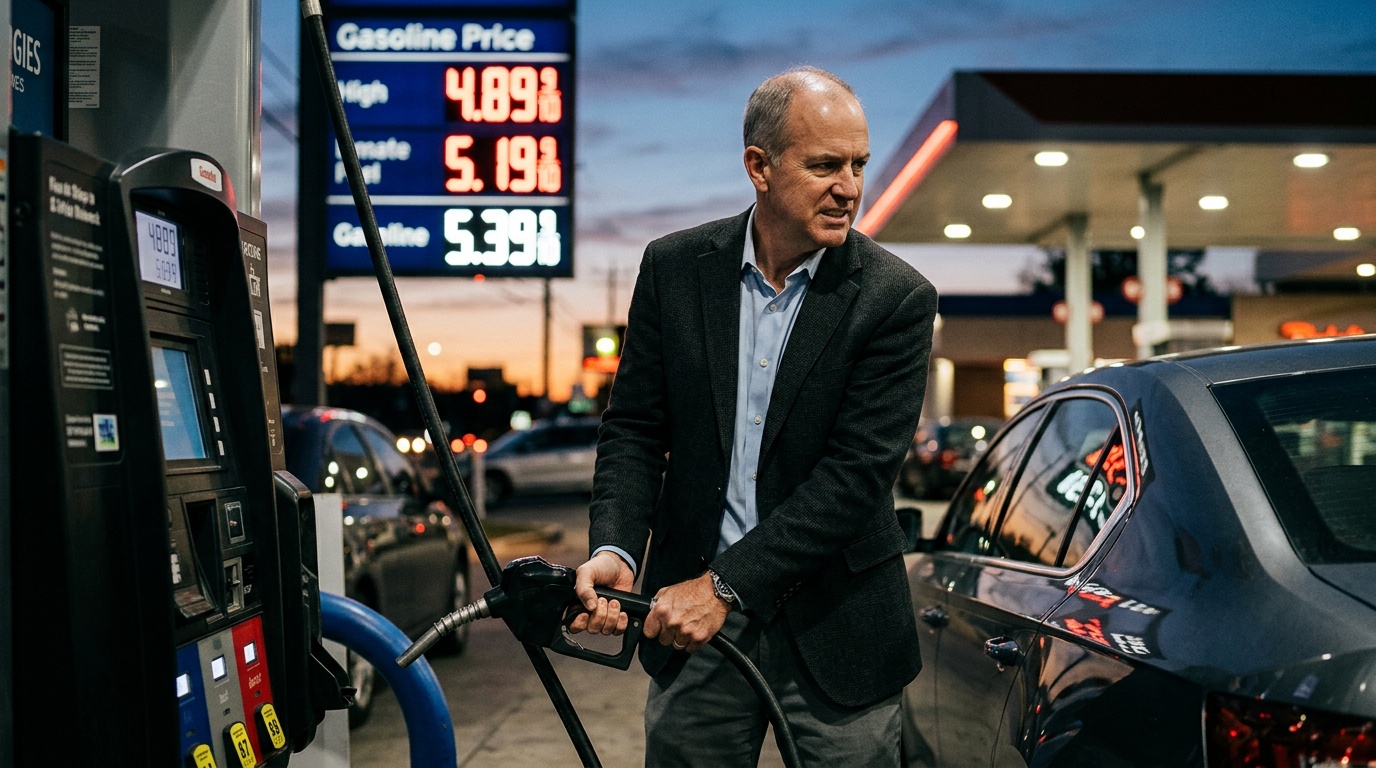
Global oil prices jumped nearly 20% to around $108 per barrel. That's the highest level since 2022. The immediate worry is the Strait of Hormuz, that narrow shipping lane where about a fifth of the world's oil passes through. If tanker traffic there gets disrupted for more than a day or two, the global supply squeeze gets real, and prices could go even higher. It's the kind of geopolitical risk that energy traders have nightmares about.
The spike in crude triggered a classic risk-off move across financial markets ahead of the Monday open. Dow futures plunged 908 points, or 1.92%, to 46,606. S&P 500 and Nasdaq futures fell 1.95% and 2.39% to 6,612.50 and 24,083.50, respectively. The United States Oil Fund (USO), a popular ETF that tracks oil prices, would likely see a massive gap up at the open.
Meanwhile, WTI Crude April 26 futures surged sharply, jumping 19.10% to trade at $108.26 per barrel. The U.S. Dollar Index, which measures the greenback against a basket of major currencies, rose 0.72% to 99.569 as investors sought safety. The pain wasn't confined to U.S. markets. Asian markets plunged, with Japan's Nikkei 225 falling 3,517.38 points, or 6.32%, to 52,103.46. South Korea's KOSPI dropped 405.21 points, or 7.26%, to 5,179.66.
Into this market maelstrom stepped former President Donald Trump with a characteristically blunt assessment. He addressed the surge in oil prices in a post on Truth Social over the weekend, arguing the economic impact would be temporary and, frankly, worth it.
"Short term oil prices, which will drop rapidly when the destruction of the Iran nuclear threat is over, is a very small price to pay for U.S.A. and world safety and peace," he wrote. "ONLY FOOLS WOULD THINK DIFFERENTLY!"
It's a straightforward trade-off, in his view: some economic pain now for long-term security gains later. Whether you agree with the politics or not, it's a clear framing of the situation that cuts through the usual hedging of financial commentary.
While markets were digesting higher prices and Trump's comments, the situation on the ground in Iran was becoming more complex. The conflict has intensified political tensions inside the country. Reports indicate that Mojtaba Khamenei has been named as the successor to his father, Supreme Leader Ali Khamenei, signaling a potential plan for continuity in leadership amid the crisis.
Iranian leaders, for their part, rejected what they characterized as Trump's demand for "unconditional surrender." Parliament Speaker Mohammad Bagher Ghalibaf said the country's future would be determined by Iranians, not foreign powers. Meanwhile, Israeli Defense Minister Israel Katz warned that any future Iranian leader could be targeted, suggesting the conflict's shadow could extend well beyond the current fighting.
The human and environmental cost of the war is also mounting. The Human Rights Activists News Agency (HRANA), a U.S.-based rights group, reported on Sunday that it recorded 752 attacks across 148 incidents in 30 provinces within 24 hours as the conflict entered its ninth day.
Perhaps more viscerally for the residents of Tehran, the group reported worsening environmental conditions after strikes on oil facilities. They warned that toxic pollution has blanketed the capital and led to reports of "black rain"—a grim reminder that modern warfare's fallout isn't just measured in points on a stock index or dollars per barrel, but in the air people breathe.
So, to sum up: oil is way up, stocks are way down, a former president says it's a fair trade, and a capital city is dealing with toxic rain. It's one of those moments where the lines between geopolitics, markets, and human welfare get very blurry, very fast. Investors will be watching the Strait of Hormuz, the political statements from all sides, and the next set of inventory numbers to see if this is a short-term spike or the start of a much more expensive new normal.